
Yanari (鳴屋): The Small Oni Who Make a House Creak
Sekien's explanation for the noises an old house makes at night
鳴屋(やなり) Yanari ASCII: Yanari
Also known as: 家鳴り, Yanari
Pronunciation: YAH-nah-ree
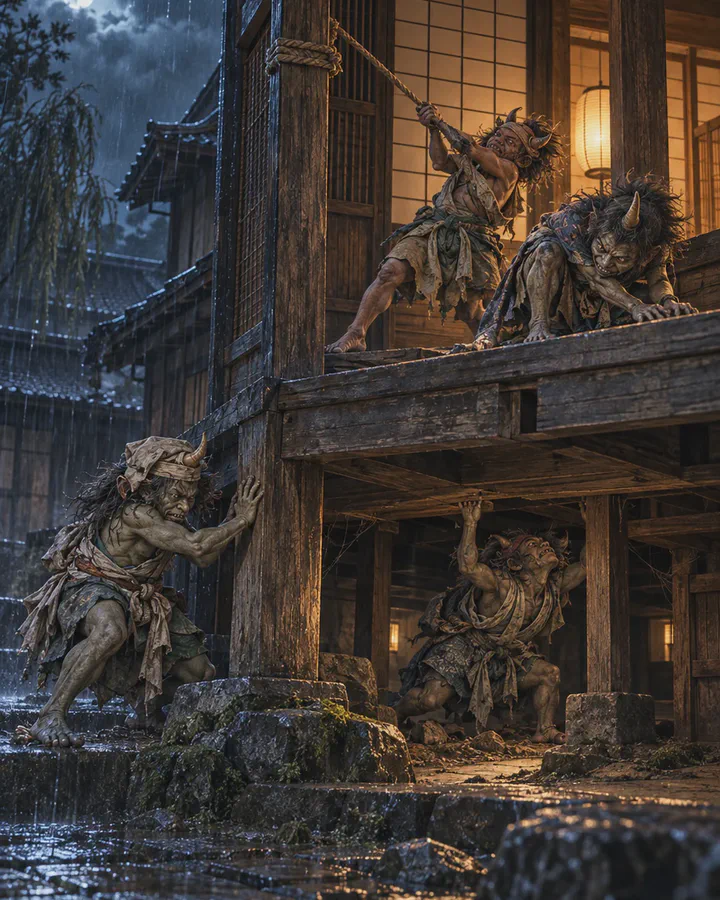
Yanari (鳴屋, “the sounding house”) is the name for the creaks and groans of a wooden house at night — and, in Toriyama Sekien’s picture book of 1776, for the crew of small horned oni who make them, clustered at the posts and under the veranda, gripping and shoving at the timbers. Sekien gave the plate a name and no caption. The comparison with the Western poltergeist is modern.
Quick Facts
- Habitat
- House
- Region
- unspecified
- Recorded period
- Toriyama Sekien's Gazu Hyakki Yagyō (1776)
- Nature
- Unknown
- Danger rating
The danger rating is an editorial summary made for readability. It is not an objective measure found in folklore sources.
Watch the Short
What is Yanari?
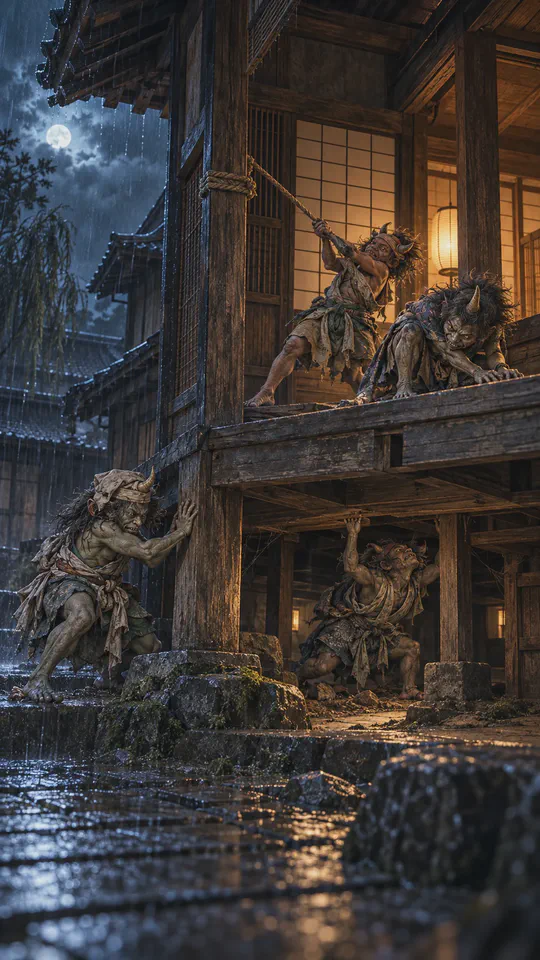
Every old wooden house makes noises at night. A post creaks. A beam cracks as it cools. Something in the frame groans and nobody caused it. In 1776 Toriyama Sekien drew who was doing it: a crew of small, stocky, horned oni, nearly naked, clustered at the posts of a house and under the edge of the raised veranda, gripping the timbers and shoving. Or holding them up. Their posture works either way, and the ambiguity is part of the charm.
That is the yanari of Gazu Hyakki Yagyō, Sekien’s first picture book. There is no person in the picture and no caption beneath it. Like most of the entries in that book, it is a name and an image, printed facing the ubume, and nothing more.
What does yanari mean?
The name is written 鳴屋: naru, to sound or ring, and ya, a house — the sounding house, read back to front as yanari. In everyday speech yanari is simply the noise a house makes when it creaks and shudders, in a wind or an earthquake or for no reason at all. Sekien took the word for the sound and gave it a crew. It is pronounced YAH-nah-ree.
Appearance
A handful of little oni, working together. Our illustration follows the plate: a wooden house at night, rain on the boards, the crew crouched under the veranda and up on the beams, bracing their shoulders against the structure.
Behavior and abilities
- They make the house sound. The name says so, and the plate shows them at the parts of a house that creak.
- They work in a crew. Sekien draws several, not one. The yanari is a gang, not a creature.
The plate shows no victim, no resident, no attack and no conversation among the oni.
Weaknesses and countermeasures
None are recorded. There is nothing in the plate to defend against — only the reason for a sound everyone has heard.
Documented plate and later imagery
Documented plate. Toriyama Sekien, Gazu Hyakki Yagyō (1776), Yō volume: small oni gathered at the posts and veranda of a wooden house, under the name 鳴屋. No explanatory text accompanies it.
Later imagery. Modern yokai books compare the yanari to the European poltergeist — a noisy spirit that knocks and rattles in the home — and some add a household plagued by it or driven out. The comparison is useful for readers today, and it is not Sekien’s; his page has no haunting, only an explanation. The plate is closer to a joke than a warning. Every old house creaks at night. Sekien drew who was doing it.
Sources and further reading
- Library Gazu Hyakki Yagyō (画図百鬼夜行) (external link) National Diet Library Search Bibliographic record for the historical picture book associated with Sekien's kodama image.
- Museum Gazu Hyakki Yagyō, Yō volume (external link) Kawasaki City Museum Archive The Yō volume of the 1776 book, carrying the Yanari and Ubume spread.
- Museum Yanari by Toriyama Sekien (external link) Wikimedia Commons The 1776 plate of small oni gathered under the eaves and posts of a house; no caption.
- Library Toriyama Sekien's Illustrated Night Parade of the Demon Horde (external link) National Diet Library Image Bank Overview of Sekien's four illustrated collections, including the 1781 Konjaku Hyakki Shūi that carries the Shinkirō plate.
Records behind this article
On the timeline
In the glossary
Related yokai
Makura-gaeshi
枕返し(まくらがえし)
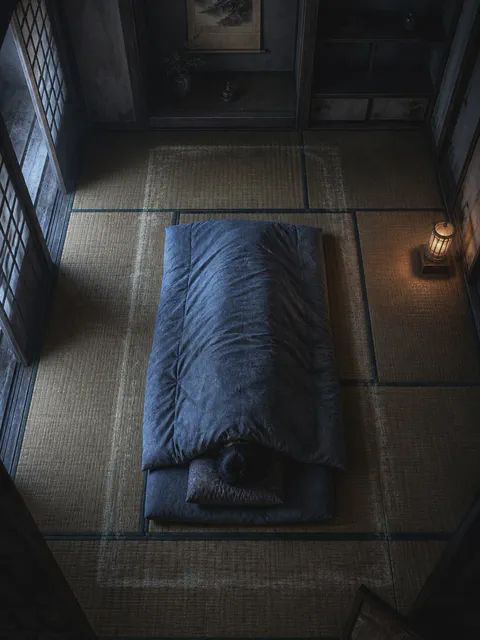
From Niigata in 1935 to Ibaraki in 1998, people recorded going to sleep facing one way and waking facing the other. The culprit changes from house to house; the reversal never does.
Tenjō-sagari
天井下り(てんじょうさがり)
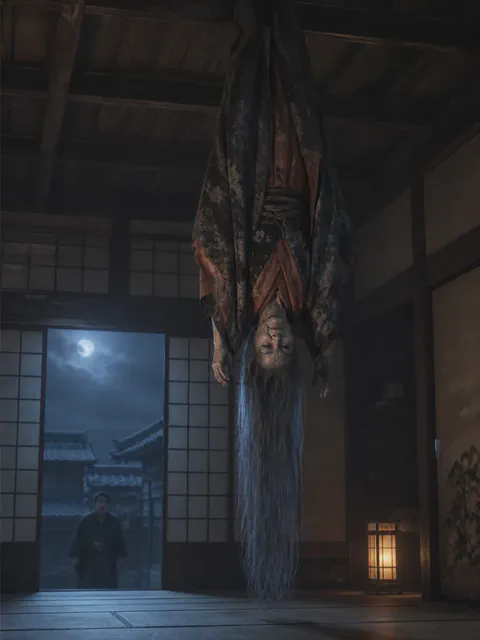
In 1779 Sekien drew an old woman hanging upside down from the ceiling, and wrote a caption that is mostly a joke — about a demon who once escaped through a roof, and a phrase for knocking someone flat.
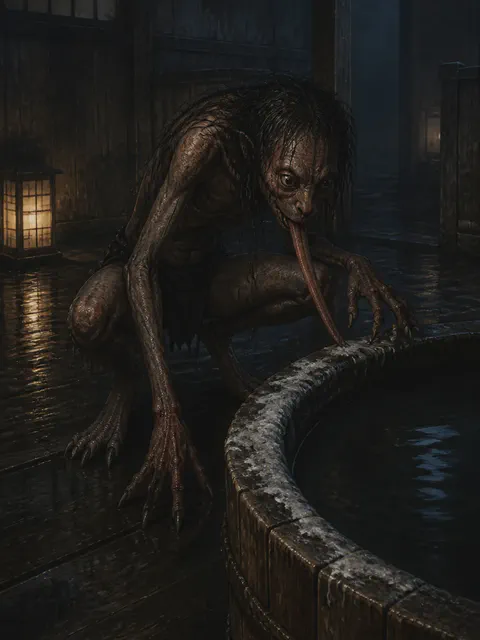

Akaname
垢嘗(あかなめ)
Sekien drew a crouching figure with a long tongue in a bathhouse in 1776 and called it the grime-licker. He wrote nothing else about it — and everything you have been told about dirty bathrooms was added afterwards.