Shōjō (猩々): The Red Spirit That Brings a Jar of Wine
The sea-dwelling drinker of the Noh play, the Chinese beast that understood human speech, and the red-faced giants that chase children at the festivals of Nagoya
猩々(しょうじょう) Shōjō ASCII: Shojo
Also known as: Shōjō-don
Pronunciation: shoh-joh
Shōjō (猩々) is the red-haired, red-faced spirit of the Noh play of the same name: a creature that lives in the sea off the Chinese coast, rises from the waves on a moonlit night to drink with a dutiful young man named Kōfū, dances, and leaves him a jar of wine that never runs dry. Behind the play stands an animal of the Chinese classics, said to understand human speech and to love wine, which a Japanese encyclopaedia of 1712 pointed out was supposed to have yellow hair. On the stage everything about it is red: the mask, the wig, the robe.
Quick Facts
- Habitat
- Sea, Coast
- Region
- Japan, China (Xunyang, in the play), Toyama (Himi, Imizu), Yamaguchi (Suō-Ōshima), Aichi (Nagoya), Tottori
- Recorded period
- Chinese classics, Wakan Sansai Zue (1712), Noh play of unknown date, festivals of the Nagoya area
- Nature
- Mixed
- Danger rating
- If you meet one
- Set out a jar of wine and a pair of sandals. It drinks, puts them on and is caught. In the article
The danger rating is an editorial summary made for readability. It is not an objective measure found in folklore sources.
Watch the Short
Who is Shōjō?
A young man named Kōfū lives at Yōzu, a village on the bank of the Yangtze, and is known for his devotion to his parents. One night he dreams that if he sells wine in the market he will prosper. He obeys the dream, and he does. Among his customers there is one who comes again and again and drinks cup after cup without the slightest change of colour. Kōfū asks his name. The customer answers that he is a shōjō and lives in the sea, and walks into the water holding the wine jar, and is gone.
So Kōfū goes down to the inlet at Xunyang on an autumn night, fills a cup, and waits. The shōjō rises out of the waves. It praises the wine, which it calls the medicine of long life, and dances, and gives Kōfū a jar from which wine wells up like a spring and never runs out. Then Kōfū wakes: it was a dream. But the jar is still there beside him, inexhaustible, and his house prospers for generations. That is the Noh play Shōjō. Its author is unknown, it is set in China in the ninth month, it is in the repertoire of all five schools, and its last line blesses “the house whose wine never runs dry”. It is a play for ending an evening with, and it is often put on last.
What does shōjō mean?
The name is two Chinese characters doubled, 猩々, and it belongs first to a beast of the Chinese classics. The Record of Rites of the first century BCE says the shōjō can speak and yet remains a beast, as a parrot can speak and remains a bird. The great materia medica of 1596 gathers the older lore: it lives in the south, in the far country of Ailao in Yunnan and in Jiaozhi in what is now northern Vietnam; it has a human face, yellow hair and a voice like a child’s; it understands people’s speech and knows their names; and it loves wine. Tang writers add that it also loves sandals, and that villagers caught it by leaving wine and a pair of sandals by the road: it would see the trap and curse the hunters, go away, come back, drink, and be found drunk with its feet tangled in the straps.
Japan kept the beast and changed its colour. The illustrated encyclopaedia of 1712 gives the shōjō a page, with a picture, and its compiler Terajima Ryōan notes with some irritation that the Chinese texts say yellow hair, that everyone in Japan now takes it to be red, and wonders whether the red has been borrowed from shōjōhi, the “shōjō scarlet” of a woollen cloth. Living in the sea is Japanese too; no Chinese source puts it there. Today the characters name the orangutan, the chimpanzee is the “black shōjō”, the gorilla the “great shōjō”, and the fruit fly that gathers round spilt wine is the shōjō-bae, the shōjō fly.
On the stage
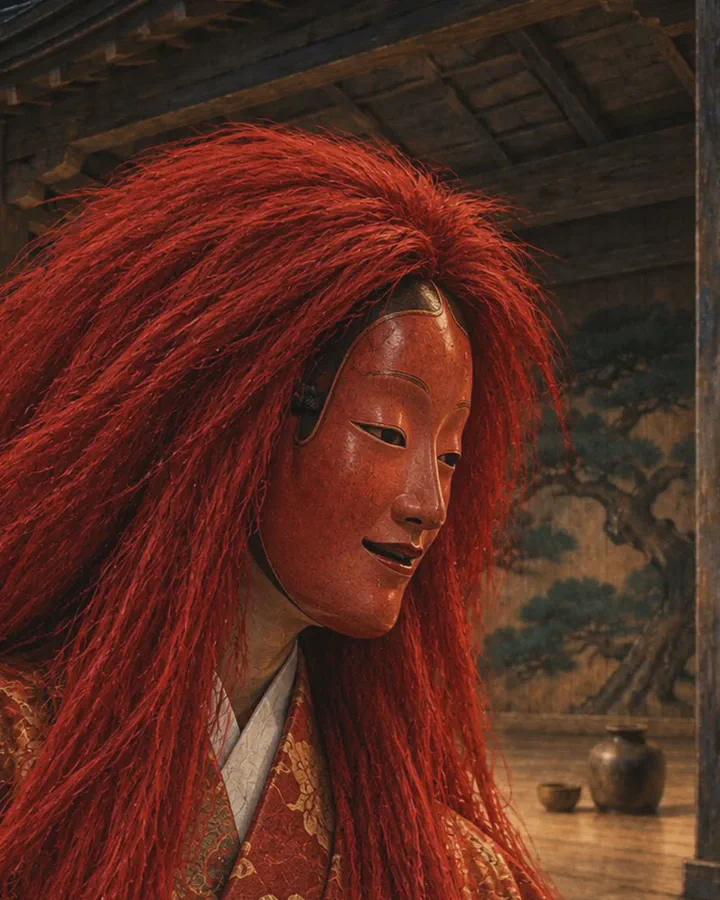
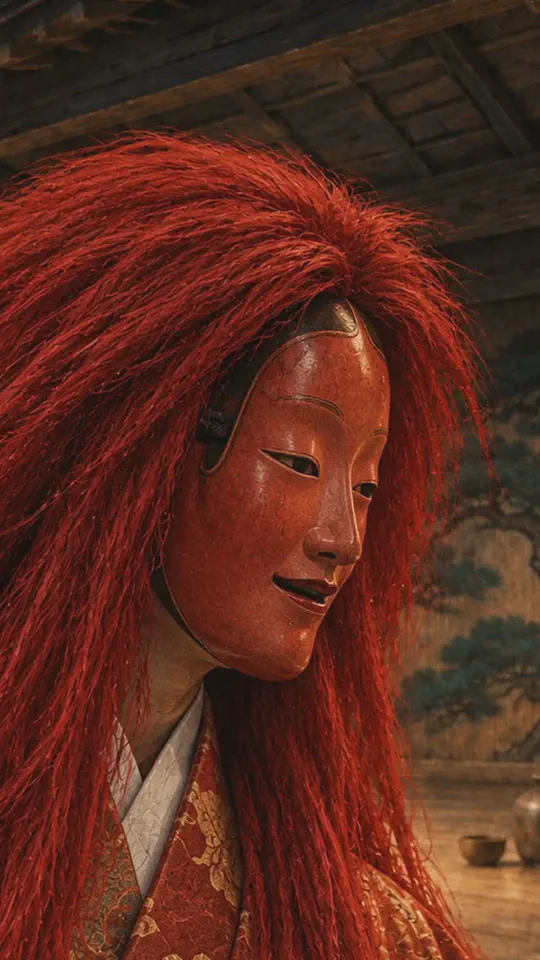
The shōjō of the Noh is red from head to foot. It wears the akagashira, a long red wig, a red brocade robe and scarlet divided trousers; only the white socks are not red. Its mask is made for this one play: the smooth face of a dōji, a boy, with a smile at the eyes and the mouth, painted red because the creature loves wine. The dance in the second half is the midare, a special piece found in only two plays, in which the actor glides as if over the surface of water, with no stamping of the feet, sliding steps, and passages on the toes that occur nowhere else in Noh. Performing it for the first time is a milestone in an actor’s training.
The play has variants. Two shōjō may dance together, or the actor may ladle wine from a jar set at the front of the stage; in January 2024 the Hōshō school staged “Seven Shōjō” in Fukuoka for the first time, one principal and six companions, all seven in red wigs and red robes, and all seven played by women. A separate play, Ryūgū Shōjō, moves the story to Japan: a fisherman at Misaki in Izu frees a shōjō caught in his net and is given a jar of the water of youth that never runs dry. And in the comic kyōgen of the same name the shōjō is lured with a jar of wine, drinks itself senseless, and is killed for its blood, which dyes cloth the scarlet that bears its name.
At sea and at the festival
Away from the stage the shōjō went into the water for good. Off Himi and Shinminato in Toyama, fishermen told of a shōjō about a metre tall that climbed aboard and sat down on the prow, sometimes six or seven at a time; if the crew cried out, it overturned the boat, so the thing to do was lie flat and silent in the bottom of the hull until it left. Off Yashiro island in Yamaguchi, now Suō-Ōshima, a voice came up from the sea floor asking for a barrel. To refuse brought a curse, and to throw one in meant the boat filled with water and sank, so the sailors knocked the bottom out of a barrel first and threw that in.
In the villages along the old Tōkaidō around Narumi, in what is now the Midori ward of Nagoya, the shōjō walks at the festivals. A grown man wears a red mask and a bamboo frame for the shoulders under a robe, and becomes a giant over two metres tall with huge red hands, and chases the children and slaps their bottoms; a child who has been slapped will not fall ill in the summer. These days the hands pat heads instead. At the shrine festival in Arimatsu it is a fixture, as it is across the neighbouring towns; in Tottori, at the other end of the country, a red-haired, red-masked shōjō leads the kirin-lion of the lion dance onto the ground. For a while in the Edo period a shōjō even stood in for Jurōjin among the seven gods of good fortune.
Appearance
On stage: red hair to the waist, a red smiling mask, red robes, and a jar. In the classics: a human face, yellow hair, the voice of a child. At sea off Toyama: a metre tall, climbing the gunwale. At the festival: two metres tall, with hands the size of trays. Our illustration takes the stage. A fictional Noh-style stage of bare cypress with a painted pine behind, an adult performer in the red wig and the red mask, a wine jar by the pillar, and Kōfū’s cup; no real theatre, actor or performance stands behind it.
Behavior and abilities
- It drinks. Cup after cup, without changing colour.
- It dances. On the water, in the moonlight, in the midare.
- It gives. A jar that never empties, to a man who was good to his parents.
- It understands. Human speech, and human names, in the classics.
- It boards boats. Off Toyama, and overturns them if the crew makes a noise.
- It chases children. At Narumi, with big red hands.
Weaknesses and countermeasures
Wine, and sandals. The Chinese accounts catch it with a jar and a pair of shoes, and the kyōgen kills it with the first alone. In the Noh there is nothing to counter, because nothing attacks: the shōjō comes to a man who has done right by his parents and leaves him richer. Off Toyama the countermeasure is silence, and off Yashiro it is a barrel with no bottom.
Documented tradition and later imagery
Documented tradition. The speaking, wine-loving beast of the Chinese classics, from the Record of Rites to the materia medica of 1596; the page of the 1712 encyclopaedia with its yellow hair and its complaint about the red; the Noh play of unknown date, its sibling Ryūgū Shōjō and the kyōgen; the boat-boarding shōjō of Himi and Shinminato and the barrel-begging voice off Yashiro; and the red giants of the Narumi festivals and the Tottori lion dance.
Later imagery. Modern yokai guides mostly keep the stage picture, a cheerful red drunkard, and the bronze on the yokai street in Sakaiminato pairs it with the kirin-lion of Tottori, red hair, red mask, red clothes. The play is stranger than the drunkard. A visitor out of the sea who asks for nothing, dances, and leaves a gift that lasts for generations is a rarer thing in these stories than any monster.
Sources and further reading
- Reliable secondary Noh, Midare (Shōjō): synopsis (external link) Japan Arts Council, Cultural Digital Library Kōfū of Yōzu on the Yangtze, the dream that tells him to sell wine, the customer who never gets drunk and names himself a shōjō of the sea, the wait at the Xunyang inlet, the dance and the jar that never runs dry, and the jar left behind when the dream ends. Set in autumn, one act.
- Reliable secondary Shōjō: play database entry (external link) Nohgaku Performers' Association The synopsis and the play's placing in the five schools' repertoires; a fifth-group play, in autumn.
- Reliable secondary Noh mask: Shōjō (external link) Japan Arts Council, Cultural Digital Library The mask made for this one play, with the smiling face of a dōji, painted red because the creature loves wine; the costume all in red.
- Reliable secondary Interview with Hisanuki Hironō on the Noh 'Shichinin Shōjō' (Hōshō school special performance, 2024) (external link) Nohgaku Performers' Association The first staging of "Seven Shōjō" in Fukuoka in January 2024 with seven women performers, all in red wigs and red robes; the shōjō as a sea spirit in a celebratory play, and its closing line on the house whose wine never runs out.
- Library Wakan Sansai Zue (倭漢三才図会) bibliographic record (external link) National Diet Library Search Catalogue record establishing the work, its compiler, and its dating.
- Museum Shōjō from the Wakan Sansai Zue (File:Wakan Sansai Zue - Shojo.jpg) (external link) Wikimedia Commons Terajima Ryōan's illustration of the shōjō in the 1712 encyclopaedia. Consulted for research only.
- Database Shōjō (猩猩) (external link) Wikipedia (Japanese) The Chinese classics on the speaking, wine-loving beast and its capture with wine and sandals, Terajima's 1712 note on yellow against red hair, the Noh costume, mask and midare dance, Ryūgū Shōjō and the kyōgen, the boat-boarding shōjō of Toyama, the barrel-begging voice of Yashiro, and the festival figures of the Narumi district.
- Reliable secondary Yokai and gods: the bronze statues of Mizuki Shigeru Road (external link) Mizuki Shigeru Museum, Sakaiminato Statues 76 and 77, the kirin-lion and the shōjō of the Tottori area: the red-haired, wine-loving shōjō in red mask and red costume leads the kirin-lion onto the ground. Consulted for the later image only.
Where it was recorded
- undated
Himi and Shinminato (now Imizu), Toyama
Legend or tale
A shōjō about a metre tall climbs aboard and sits on the prow, sometimes six or seven at once; if the crew makes a noise it capsizes the boat
- undated
Yashiro island (Suō-Ōshima), Yamaguchi
Legend or tale
A voice from the sea bottom asks for a barrel; refuse and it brings a curse, give one and it fills the boat with water, so the barrel is thrown in without its bottom
- undated
Narumi and Arimatsu, Midori ward, Nagoya, Aichi
Living rite
At the festivals a red-masked shōjō figure over two metres tall chases the children and slaps their bottoms with its big red hands; a slapped child escapes the summer sickness
- undated
Tottori, Tottori
Living rite
A red-haired, red-masked shōjō leads the kirin-lion of the lion dance onto the ground
Places named in the records behind this article. Coordinates are approximate. View on the map
Records behind this article
In the glossary
Related yokai
Hihi
狒々(ひひ)
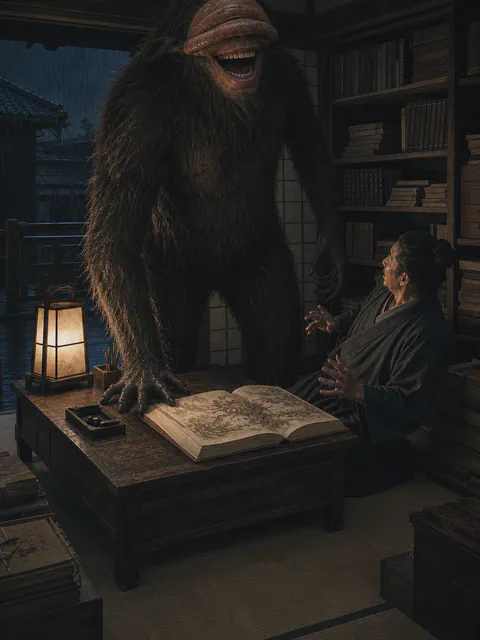
A 1712 Japanese encyclopedia compiled older Chinese descriptions of a black-haired, long-lipped creature that laughs when it sees a person — and whose upper lip then rolls up over its own eyes.
Kirin
麒麟(きりん)
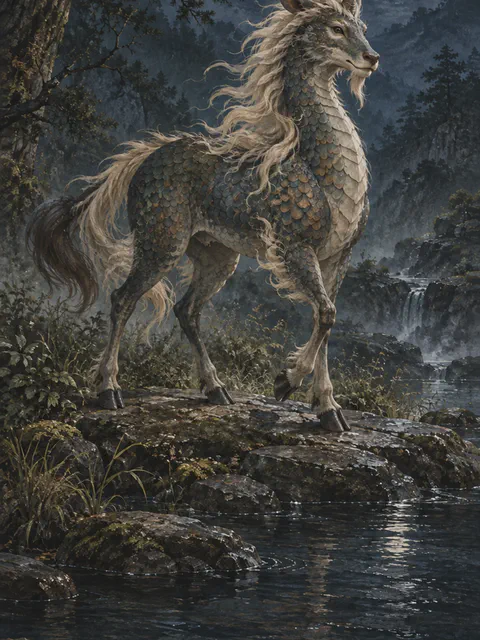
The kirin is an auspicious beast of Chinese origin, shown in Japanese art from the eighth century: deer-bodied, one-horned, and said to appear only when the world is well governed. It harms no living thing — not even the grass.

Umi-bōzu
海坊主(うみぼうず)
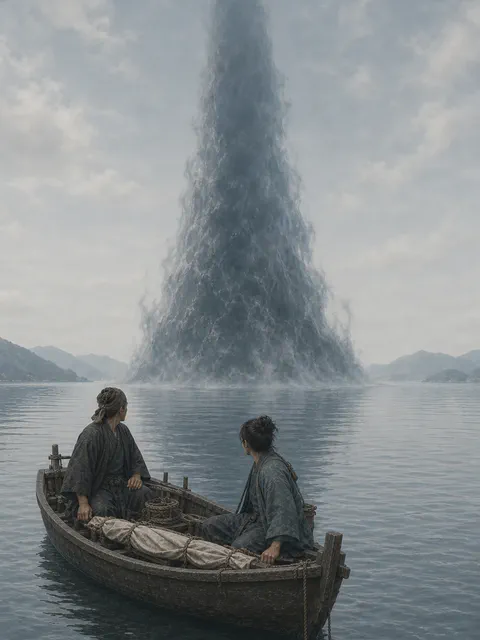
One account describes a vast Buddha-like shape crossing ahead of a boat on a clear, windless day, then slowly thinning until it vanished.