
Raijū (雷獣): The Thunder Beast That Rides the Storm
Japan's lightning animal — mouse-sized in one record, puppy-sized in the next
雷獣(らいじゅう) Raijū ASCII: Raiju
Also known as: Raiju, Thunder beast
Pronunciation: rye-JOO
Raijū (雷獣, “thunder beast”) is the animal that Edo-period Japan believed came down with lightning. Near Karasuyama in Shimotsuke it was mouse-like but bigger than a weasel, and in summer it waited at a hole in the mountain until its own thundercloud arrived to carry it away. At Iwatsuki one fell into a field, was caught alive, refused all food, and died. No two records give it the same body.
Quick Facts
- Habitat
- Mountain, Sky, Field
- Region
- Karasuyama (Shimotsuke), Iwatsuki
- Recorded period
- Hokusō Sadan (1829 printing), Edo-period essays and images
- Nature
- Harmful
- Danger rating
- If you meet one
- Catch it. The people at Iwatsuki ran it down with their hands; it would not eat, and died. In the article
The danger rating is an editorial summary made for readability. It is not an objective measure found in folklore sources.
Watch the Short
What is Raijū?
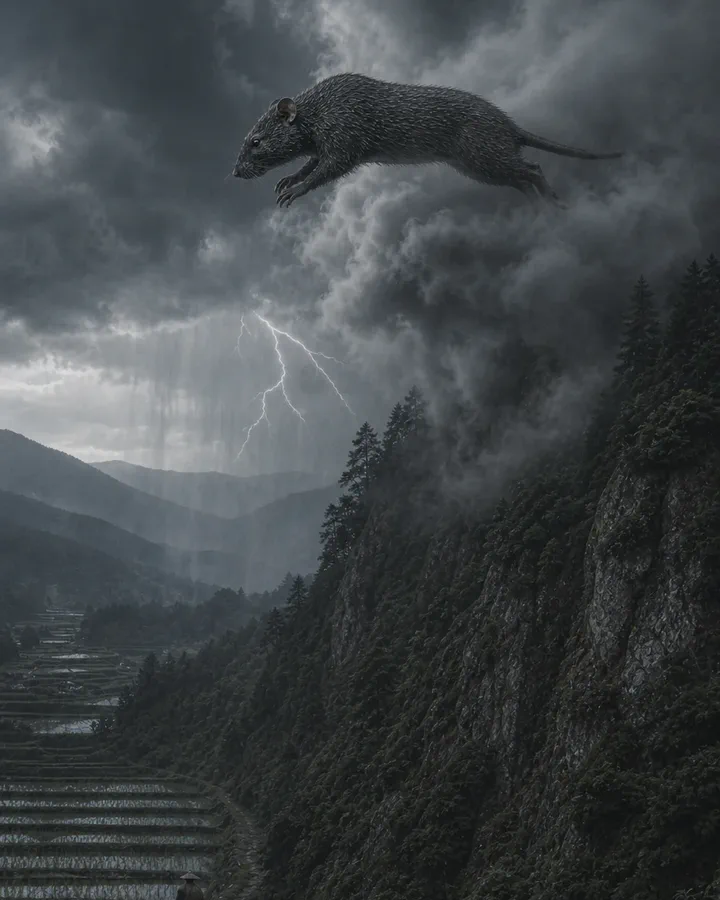
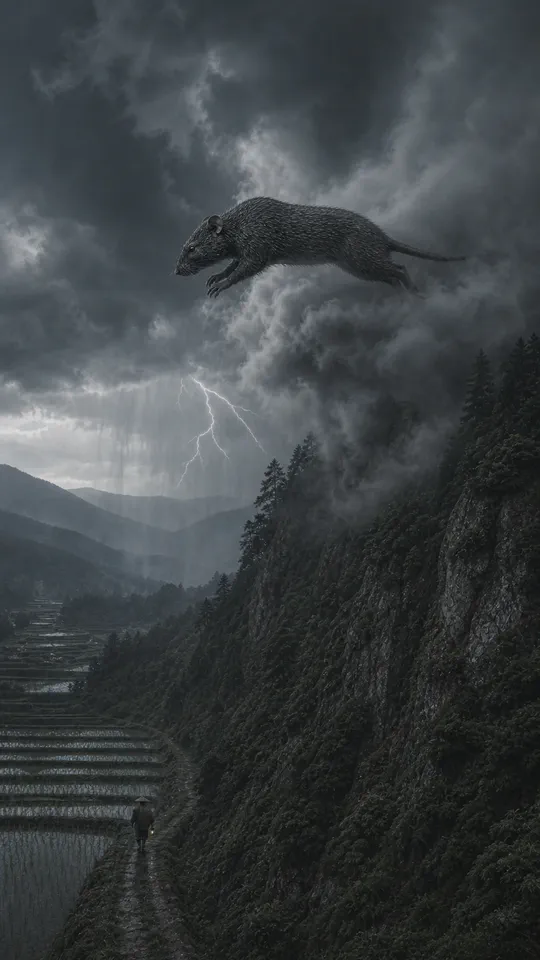
Near Karasuyama, in the old province of Shimotsuke — today’s Tochigi — there was an animal called the raijū. It looked like a mouse, though it was bigger than a weasel. In summer, holes opened of their own accord in the mountains round about, and the raijū would put its head out of one and wait. When the evening thunderheads rolled in, one cloud among them was its cloud, come to fetch it; it climbed on and flew away. In spring, the people of the district went out and hunted raijū.
That is the account in Hokusō Sadan, an Edo essay collection by Tachibana Shunki printed in 1829, and it has the thing the thunder beast is really about. The raijū does not make lightning. It commutes on it.
What does raijū mean?
The name is written 雷獣: rai, thunder, and jū, beast. It is less a species name than a job description. Lightning struck a hillside and left split trees, gouged bark and torn earth, and the question was what had come down with it. The raijū was the answer: whatever animal was found nearby, or imagined nearby, after a strike.
Which is why the records cannot agree on what it looks like.
Appearance
Our illustration follows the Karasuyama record and nothing else: a single animal, mouse-like but larger than a weasel, wet grey-black fur, round ears, a narrow muzzle, a low body, clawed feet. Lightning happens in the sky around it, never from its eyes or mouth or coat.
The Iwatsuki raijū, in Toryūkō Zuihitsu, is a different animal entirely. It fell onto a lord’s estate at Iwatsuki, now part of Saitama, and ran round and round the edge of a field until people caught it. It would not eat, and it died. Stuffed, it looked on the whole like a puppy, with claws as sharp as a bear’s, an extra joint in the fold of its hind legs, and coarse bristles growing in tufts through thin fur. A printed sheet from the same period shows a raijū with a single leg. Painted ones in museum collections differ again.
Behavior and abilities
- It waits. At the mouth of a hole in the mountain, in summer, when storms are due.
- It rides. A cloud comes for it, and it goes with the cloud.
- It falls. At Iwatsuki it arrived on the ground and ran in circles — a creature that had missed its ride.
- It leaves marks. Split trees and clawed bark were read as the traces of its coming and going.
What it does not do is hunt. There is no record of a raijū attacking a person. It is an animal attached to a hazard, not a predator.
Weaknesses and countermeasures
No charm and no ritual. What the records offer instead is capture: people at Karasuyama hunted raijū every spring, and at Iwatsuki they ran one down in a field and kept it until it starved. The thunder beast could be caught by ordinary people with ordinary hands. It simply could not be kept alive.
Documented tradition and later imagery
Documented tradition. A mouse-like animal bigger than a weasel, waiting at a mountain hole near Karasuyama and leaving on a summer thundercloud, with raijū hunts in spring (Hokusō Sadan, printed 1829); a puppy-like creature with bear’s claws that fell at Iwatsuki, was caught, refused food and died (Toryūkō Zuihitsu); a one-legged raijū on a printed sheet; and painted versions that differ again.
Later imagery. Games and illustrated collections have settled on one design — a wolf or a tiger sheathed in electricity, hurling lightning as a weapon, often kept as a pet by the thunder god Raijin. It makes a good boss fight. It also throws away what the Edo writers were doing, which was trying in good faith, and with no agreement at all, to describe an animal nobody had managed to see clearly.
The one in the hole is still the best of them. Small, wet, watching the sky, waiting for the right cloud.
Sources and further reading
- Primary text Raijū entry from Hokusō Sadan (external link) Tachibana Shunki; International Research Center for Japanese Studies The adopted account from near Karasuyama in Shimotsuke: mouse-like but larger than a weasel, watching from a mountain hole in summer until its thundercloud arrives to carry it away.
- Library Hokusō Sadan (北窓瑣談), 1829 printing (external link) Ibaraki University Digital Collections Digitized copy of the Edo-period essay collection containing the account.
- Primary text Raijū entry from Toryūkō Zuihitsu (external link) International Research Center for Japanese Studies A captured raijū at Iwatsuki described as puppy-like, with claws as sharp as a bear's. A different body from the Karasuyama account.
- Museum Printed sheet, one-legged raijū (tentative title) (external link) National Museum of Japanese History An Edo-period image showing yet another raijū form, with a single leg.
- Museum Raijū-zu (雷獣図), Edo period (external link) Yumoto Koichi Memorial Japan Yokai Museum Museum exhibition record of an Edo-period painting of the creature.
Where it was recorded
- 1829
Karasuyama (Shimotsuke), Tochigi
Legend or tale
Mouse-like beast that waits at a hole and rides the thundercloud
- undated
Iwatsuki, Saitama
Legend or tale
Raijū that fell into a field, was caught, refused food and died
Places named in the records behind this article. Coordinates are approximate. View on the map
Records behind this article
On the timeline
In manga
- Inuyasha 犬夜叉 Uses the names, reinvents the rest
- Kiitarō Shōnen no Yōkai Enikki 奇異太郎少年の妖怪絵日記 Keeps the traditional forms, invents the stories
- Mokke もっけ Keeps the traditional forms, invents the stories
- Mushishi 蟲師 Yokai-adjacent: urban legends and mixed lore
- xxxHOLiC ×××HOLiC Uses the names, reinvents the rest
Related yokai
Kamaitachi
鎌鼬(かまいたち)
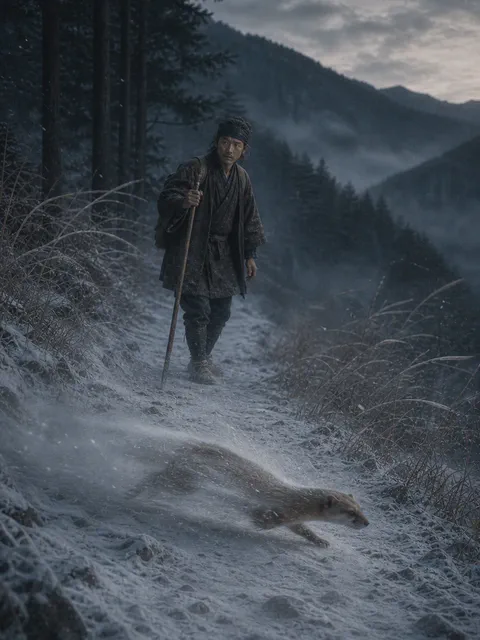
In Nagano in 1955 the kamaitachi was a weasel so fast that no one had ever seen it — known only by the clean cut it leaves on a stumbling traveler's shin.
Nue
鵺(ぬえ)
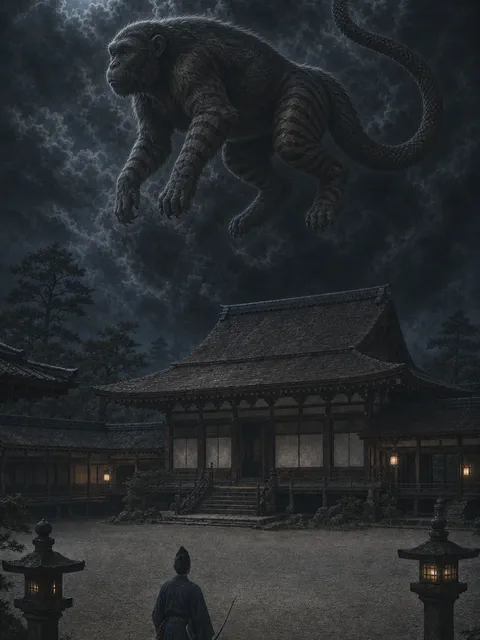
In The Tale of the Heike, a black cloud and a bird's cry sicken the emperor until an archer shoots the creature down — and the versions disagree on what fell.
Nobusuma
野衾(のぶすま)
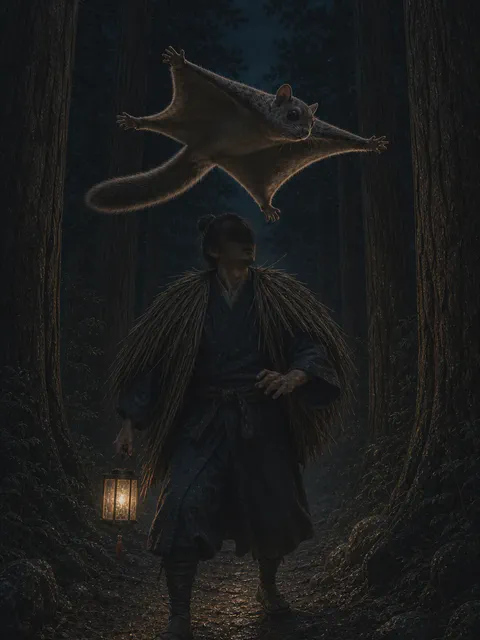
A 1938 Tokyo record describes something like a flying squirrel that drifts down onto a traveler and covers the eyes and mouth — and stops there.