
Nozuchi (野槌): The Thick, Short Thing in the Dwarf Bamboo
A field spirit of the oldest chronicles, a mouth with no eyes in a thirteenth-century sermon, a mallet-shaped snake of the Yoshino mountains in 1712, and the thick-bodied thing that came out of the bamboo in a Nagano record of 1935
野槌(のづち) Nozuchi ASCII: Nozuchi
Also known as: Nozuchi-no-kami, Nozuchi-hebi, Nōzuchi
Pronunciation: noh-zoo-chee
Nozuchi (野槌) is a name that has belonged to several different things. In a record printed in Nagano in 1935 it is a monster with a thick body and a short length that suddenly comes out of the shade under old trees, dark even at midday, or out of the dwarf bamboo. In the Kojiki it is another name of the goddess of the fields; in a Buddhist tale collection finished in 1283 it is a beast with a mouth and no eyes, nose or limbs; in an encyclopaedia of 1712 it is a snake of the Yoshino mountains shaped like a mallet without a handle. The mountain villages of Gifu, Nara and Wakayama kept the last of these, and it is the creature now better known as the tsuchinoko.
Quick Facts
- Habitat
- Forest, Mountain, Field
- Region
- Japan, Nagano (Azumino), Nara (Yoshino, Totsukawa), Gifu (Hida), Wakayama (Hidaka), Yamanashi (Dōshi)
- Recorded period
- Kojiki and Nihon Shoki, Shasekishū (1283), Wakan Sansai Zue (1712), Sekien's picture book (1779), folklore records (1918-1981)
- Nature
- Mixed
- Danger rating
- If you meet one
- Run uphill. It comes down a slope fast and climbs slowly. In the article
The danger rating is an editorial summary made for readability. It is not an objective measure found in folklore sources.
Watch the Short
What is Nozuchi?
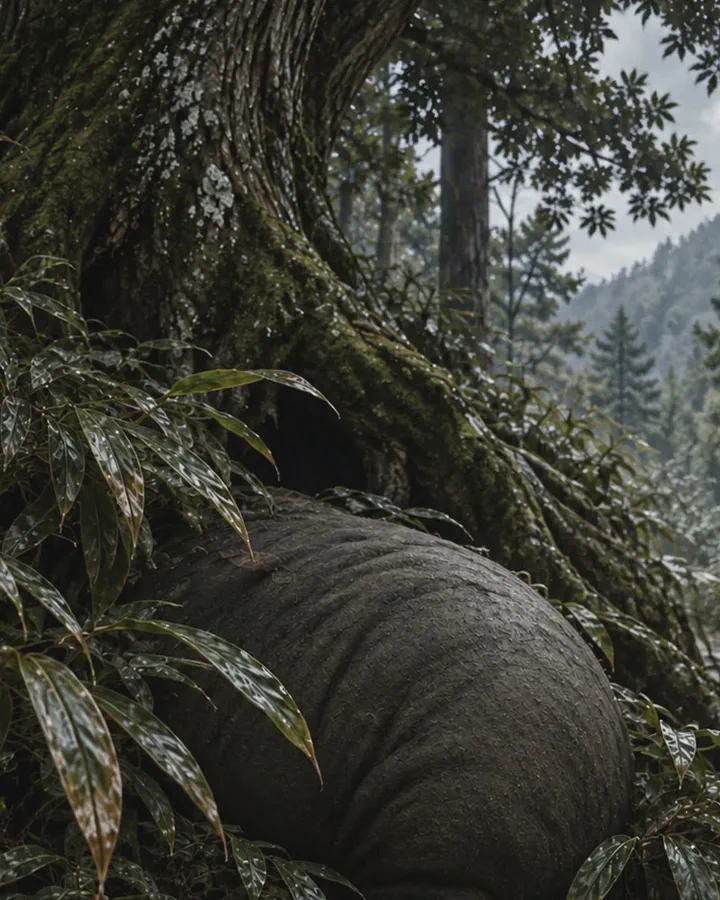
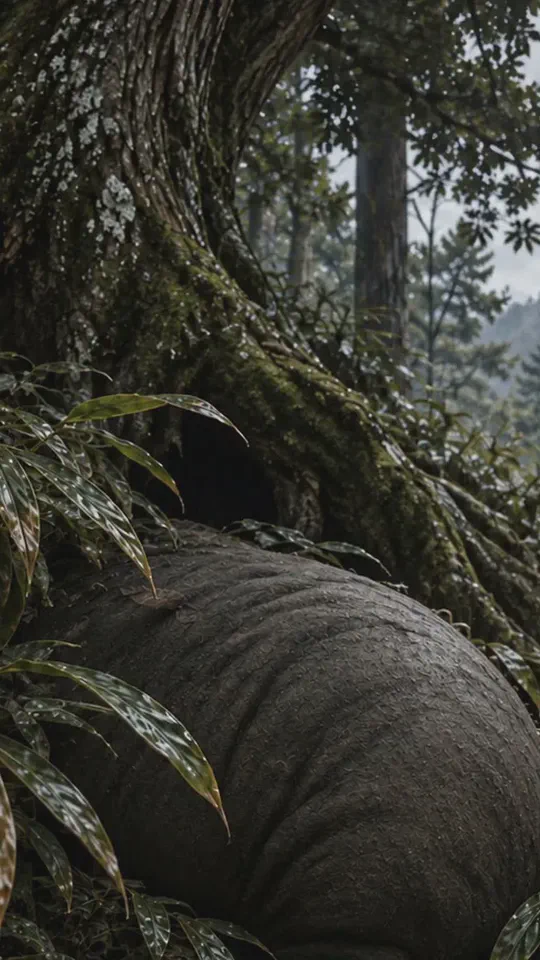
In December 1935 a local-history journal in Nagano printed a short piece called “Nozuchi and Nomori”. What it preserves from the country that is now the city of Azumino comes to two sentences. From the shade beneath old trees, where it is dark even in the daytime, or from the middle of the kumazasa, the broad-leaved dwarf bamboo of the mountain woods, a monster with a thick trunk and a short length suddenly appears. That, people said, is the nozuchi.
Two things are fixed there: where it comes from, and its proportions. It is thick, it is short, and it arrives without warning in a place where the light does not reach at noon. The name it carries was already more than a thousand years old, and in that time it had been a god, a sermon and a snake.
What does nozuchi mean?
The oldest reading is no-tsu-chi, “spirit of the field”. No is open country, in one view the sloping ground at the foot of the mountains; chi is an old word for a spirit, the same one that ends orochi, the great serpent, mizuchi, the water spirit, and ikazuchi, thunder. It belongs to a layer of belief older than gods with human shapes, and the things named with it were imagined as something close to snakes. Dictionaries of the Heian period give nozuchi as the Japanese reading of the characters for viper and scorpion.
The usual characters, 野槌, say something else: “field mallet”. That spelling fits the creature of the Edo period, a snake as thick at the tail as at the head, like the head of a mallet with the handle taken off. In Hida the name was also written 野筒, “field tube”, and in the Hidaka valley of Wakayama the same animal was a tegine, a hand pestle.
From field spirit to mouth without eyes
In the Kojiki, Izanagi and Izanami give birth to the deities of wind, trees, mountains and fields, and the deity of the fields is Kayanohime-no-kami, the lady of the thatching grass, “also called Nozuchi-no-kami”. She and the mountain god Ōyamatsumi divide the mountains and the fields between them and produce eight more deities. The Nihon Shoki calls her the ancestor of grasses and gives the second name simply as Nozuchi, with no “god” attached. A shrine in Kanazawa that appears in an early register of shrines still bears the name, now read Nuzuchi; its founding story is set in 732, when the deity appeared as an old man during an epidemic, was enshrined as he instructed, and the sickness stopped.
The Shasekishū, the collection of Buddhist tales that the monk Mujū finished in 1283, turns the word into a warning. A scholar-monk of Mount Hiei who was careless of the precepts is reborn as a nozuchi: a large beast, seldom met, that lives deep in the mountains, with no eyes, no nose, no hands and no feet, only a mouth, and it eats people. The shape is the sermon. In life the monk had been all talk, with no eye of wisdom, no hand of faith and no foot of discipline, and so he came back as what was left.
The mallet snake of Yoshino
The Wakan Sansai Zue, the illustrated encyclopaedia of 1712, files the nozuchi-hebi among the snakes. It lives in the hollows of trees in the deep mountains. A large one is three shaku long and five sun through, about ninety centimetres by fifteen, with head and tail of the same thickness, like a mallet with no handle, which is given as the reason for the name. It is seen from time to time by the Natsumi river and the Seimei falls in the Yoshino mountains of Yamato, now Nara. Its mouth is large and it bites people in the leg.
The mountain villages went on describing this animal into the twentieth century, and no two agree. In Hida, in 1918, it is a round creature with neither head nor tail that follows people; a book on the birds of Hida compares it to a billet of firewood; at Gero it rolls down from the heights. At Dōshi in Yamanashi a nozuchi of about 1877 had a trunk the size of a five-shō cask, beat the ground with its head and tail and went by as fast as an arrow, and the villagers feared it as the king of the beasts. In Totsukawa, in 1968, one nozuchi is four or five centimetres through, bleached-looking and thought harmless, while another is venomous, and a person who saw a thick one coming down from above was ill for two or three years. In neighbouring Shimokitayama the nozuchi trains a thousand years in the sea and a thousand in the mountains to rise to heaven, and fails if a human being sees it.
That same Shimokitayama record adds that the nozuchi is also called tsuchinoko, “child of the mallet”. This was a regional word of Kyoto, Mie, Nara and northern Shikoku until a newspaper serial of 1972 and its television version the following year made it national, and since then the stout rolling snakes of every district, nozuchi included, have been called by it.
Appearance
There are four bodies, and they do not combine. The Azumino record of 1935 gives a thick trunk and a short length. The Shasekishū gives a large beast that is a mouth and nothing else. The 1712 encyclopaedia gives a snake ninety centimetres long with a big mouth and matching ends. Toriyama Sekien, in his picture book of 1779, drew a long body covered in hair, swallowing a rabbit, and wrote beside it that nozuchi means the spirit of grasses and trees and that the old tale collection calls it a thing without eyes or nose.
Our illustration follows the Nagano record alone: a thick, short, earth-grey body among dwarf bamboo at the foot of an old tree, in a wood that is dim by day, with the head lost behind the leaves. The colour, the surface and the particular tree are ours, and the scene is an imagined one.
Behavior and abilities
- It appears suddenly. Out of the dark under old trees or out of the dwarf bamboo, in Azumino in 1935.
- It eats people. The mouth-only beast of the Shasekishū.
- It bites the leg. The Yoshino snake of 1712, which comes down a slope fast and climbs slowly.
- It rolls. Down the road at passers-by in the Gifu entry of a 1938 glossary of yokai names; end over end, springing at people, in the Hidaka valley; down from the Bat Rock on Sanri-ga-mine at Minabe, three shaku long and two thick, to frighten whoever comes.
- It swallows a rabbit whole. When it has grown large, in the Hidaka valley, as in Sekien’s picture.
- It sickens by seeing. At Ōtō in Nara it curls up and charges at a human shadow, and whoever it notices first takes a high fever and may die.
Weaknesses and countermeasures
The 1712 encyclopaedia gives the one piece of advice with a reason attached: the nozuchi is quick downhill and slow uphill, so a person who meets one runs for higher ground. At Ōtō the rule is about eyes, not feet. Someone who catches sight of the nozuchi before it has seen them comes to no harm. In the Hidaka valley a stone stands to Nozuchi Daimyōjin, the great bright deity Nozuchi, and the thing that springs at travellers is honoured there as a god. The Azumino record offers nothing. The monster comes out, and the account ends.
Documented tradition and later imagery
Documented tradition. The field deity Nozuchi of the Kojiki and the Nihon Shoki; the reborn monk of the Shasekishū of 1283; the mallet snake of Yoshino in the encyclopaedia of 1712; Sekien’s hairy rabbit-eater of 1779; a slope at Inaniwa in Akita where a travel diary of 1814 has nurarihyon, otoroshi and nozuchi passing in a night procession; the records of Hida in 1918, Azumino in 1935, Dōshi in 1955, Totsukawa and Shimokitayama in 1968, Gero in 1970, Ōtō in 1972, and the Hidaka valley and Minabe in 1974 and 1981.
Later imagery. A comic picture book of the Edo period by Koikawa Harumachi turned the nozuchi into a person with a blank face and a great mouth on top of the head. The modern figure is the tsuchinoko, the squat snake that became a national name in the 1970s and took over the nozuchi’s shape and most of its stories. The Azumino record is older than that fashion and smaller than any of it: no mouth, no hair, no venom, no mallet. A dark place under old trees in the middle of the day, and something thick and short that was not there a moment before.
Sources and further reading
- Fieldwork collection Nozuchi account from Azumino, Nagano (1935), record 0910004 (external link) International Research Center for Japanese Studies "Nozuchi and Nomori", Shinano (first series) 4(12), 15 December 1935, p. 17: a monster with a thick trunk and a short length that suddenly appears from the shade of old trees, dark even by day, or from dwarf bamboo. Summary only; it gives no face, limbs, size or behaviour beyond the appearance. The region field uses the modern city name.
- Academic book Nozuchi-no-kami (野椎神), Kojiki deity-name database (external link) Kokugakuin University, Kojiki-gaku Center The field deity as another name of Kayanohime; the reading no-tsu-chi, spirit of the field, and the chi shared with orochi, mizuchi and ikazuchi; the Heian glosses for viper and scorpion; the Shasekishū's lax scholar-monk of Mount Hiei reborn as a mouth-only beast that eats people; the nozuchi-hebi of the Wakan Sansai Zue; the weak link to the modern tsuchinoko; and the Nuzuchi shrine in Kanazawa with its founding story of 732.
- Academic book Kayanohime-no-kami (鹿屋野比売神), Kojiki deity-name database (external link) Kokugakuin University, Kojiki-gaku Center The deity of the fields born to Izanagi and Izanami with the deities of wind, trees and mountains; her other name Nozuchi-no-kami; the eight deities she bears with Ōyamatsumi after dividing mountains and fields; the Nihon Shoki's grass ancestor Kusano-hime, also named Nozuchi; kaya as thatching grass.
- Database Nozuchi (野槌) (external link) Wikipedia (Japanese) Auxiliary pointer. The Wakan Sansai Zue entry (tree hollows, three shaku by five sun, Natsumi river and Seimei falls in Yoshino, fast downhill and slow uphill); the Shasekishū's explanation of the mouth without eye of wisdom, hand of faith or foot of precepts; Sekien's hairy nozuchi eating a rabbit and his note on the spirit of grasses and trees; Koikawa Harumachi's human-shaped nozuchi; and the spread of the name tsuchinoko over nozuchi-type snakes from the late 1960s.
- Database Shasekishū (沙石集) (external link) Wikipedia (Japanese) Used only for the compiler and dates: the monk Mujū, begun 1279 and completed 1283, a ten-volume collection of Buddhist tales.
- Fieldwork collection Nozuchi-hebi in Saikai Zokudan, quoting the Wakan Sansai Zue, record 3200087 (external link) International Research Center for Japanese Studies An Edo miscellany repeating the encyclopaedia entry: five sun thick and three shaku long, head and tail alike, seen at the Natsumi river and Seimei falls in Yoshino, a large mouth that bites the leg, quick downhill and slow uphill, so one flees to high ground.
- Fieldwork collection Nozuchi snake of Yoshino in a 1921 study of thunder gods, record 0690224 (external link) International Research Center for Japanese Studies Restates the encyclopaedia's snake: living in tree hollows in the deep mountains, five sun across and three shaku long, head and tail equal, like a mallet with no handle.
- Library Wakan Sansai Zue (倭漢三才図会) bibliographic record (external link) National Diet Library Search Catalogue record establishing the work, its compiler, and its dating.
- Museum Nozuchi from Konjaku Gazu Zoku Hyakki (File:SekienNodzuchi.jpg) (external link) Wikimedia Commons Sekien's 1779 print: a long hairy creature devouring a hare, with a note that nozuchi is a spirit of plants and trees and that the Shasekishū gives it no eyes or nose. Consulted for research only.
- Library Konjaku Gazu Zoku Hyakki bibliographic record (今昔畫圖續百鬼) (external link) National Diet Library Search Bibliographic record for Sekien's 1779 picture book.
- Database Records under the name Nozuchi (ノヅチ) (external link) International Research Center for Japanese Studies Twenty-nine records from 1918 to 1982, with the written forms (野槌, 野筒, のづち) and the companion names tsuchinoko, tsuchi-hebi, nōzuchi and tegine. Use individual records; they do not describe one creature.
- Fieldwork collection Nozuchi (野筒) of Hida, Gifu (1918), record 1490004 (external link) International Research Center for Japanese Studies "The nozuchi of Hida", Dozoku to Densetsu 1(1), August 1918: a round creature with neither head nor tail that comes after people.
- Fieldwork collection Nozuchi in a book on the birds of Hida (1921-1922), record 3000038 (external link) International Research Center for Japanese Studies A small snake-like thing in the mountains that chases walkers freely, with no head and no tail, like a billet of firewood. The record has no region field; the place is taken from the book's title only.
- Fieldwork collection Nozuchi in Yanagita's yokai glossary (1938), record 2180756 (Gifu) (external link) International Research Center for Japanese Studies Yanagita Kunio, "Yōkai Meii (3)", Minkan Denshō 3(12), 20 August 1938, p. 12: a short snake shaped like a mallet that rolls along the road and attacks passers-by.
- Fieldwork collection Tsuchi-hebi and nozuchi at Gero, Gifu (1970), record 0030279 (external link) International Research Center for Japanese Studies Ashinaka 124, December 1970: the tsuchi-hebi is the nozuchi, a mallet-shaped snake without head or tail that rolls down from the heights and attacks people.
- Fieldwork collection Nozuchi of Dōshi, Yamanashi (1955), record 0030137 (external link) International Research Center for Japanese Studies Ashinaka 47, July 1955: around 1877 a nozuchi lived in the Dōshi mountains, its trunk the size of a five-shō cask, striking the ground with head and tail and passing as fast as an arrow; shaped like a straw-beating mallet and feared as king of the beasts.
- Fieldwork collection Nozuchi of Totsukawa, Nara (1968), record 0700140 (external link) International Research Center for Japanese Studies Kinki Minzoku 51, March 1968: a person who saw a thick nozuchi coming from above was shocked into two or three years of illness and afterwards joined a new religion.
- Fieldwork collection Nozuchi and nōzuchi of Totsukawa, Nara (1968), record 0700142 (external link) International Research Center for Japanese Studies Same survey: the nozuchi is about one and a half sun through, short and bleached-looking, rolls along and is not thought dangerous; the nōzuchi is short, round, rolls, and is venomous.
- Fieldwork collection Tsuchinoko and nozuchi of Shimokitayama, Nara (1968), record 0700144 (external link) International Research Center for Japanese Studies Same survey: the nozuchi is also called tsuchinoko; it trains a thousand years in the sea and a thousand in the mountains to ascend to heaven but cannot if a person sees it, and leaves for the sea with the river in a landslide.
- Fieldwork collection Nozuchi of Ōtō, Gojō, Nara (1972), record 1260016 (external link) International Research Center for Japanese Studies Chūkyō Minzoku 9, 1 May 1972: a snake-like thing that curls up and charges at a human shadow; finding it first is safe, but being found first brings high fever, illness or death.
- Fieldwork collection Nozuchi, nōzuchi and tegine at Hidakagawa, Wakayama (1974), record 0700201 (external link) International Research Center for Japanese Studies Kinki Minzoku 60-61, 20 March 1974: a stone monument to Nozuchi Daimyōjin; the creature, also called tegine, advances end over end, springs at people and when grown swallows even a rabbit in one mouthful.
- Fieldwork collection Nozuchi of Sanri-ga-mine, Minabe, Wakayama (1981), record 1461102 (external link) International Research Center for Japanese Studies A university folklore survey of the former Takagi and Kiyokawa villages, July 1981: a monster at the Bat Rock, three shaku long and two shaku thick, that rolls down from above to frighten people.
- Database Tsuchinoko (ツチノコ) (external link) Wikipedia (Japanese) Auxiliary pointer. Tsuchinoko as a dialect word of Kyoto, Mie, Nara and northern Shikoku; nozuchi among some forty regional names; the 1972 newspaper serial and its 1973 television adaptation that made the name national.
- Database Nurarihyon (ぬらりひょん) (external link) Wikipedia (Japanese) Collects the scroll lineage, the Okayama sea account of 1984, the 1814 travel-diary passage on the slope at Inaniwa, the wording of the 1929 caption, the research that traced the modern image to it, and the 1985 television series.
Where it was recorded
- 1935
Azumino, Nagano
Folklore record
A monster with a thick trunk and a short length suddenly appears from the shade of old trees, dark even by day, or from the dwarf bamboo
- 1283
Mount Hiei, Shiga
Legend or tale
A scholar-monk careless of the precepts is reborn as a nozuchi, a beast of the deep mountains with a mouth and no eyes, nose, hands or feet
- 1712
Natsumi river and Seimei falls, Yoshino, Nara
Print or picture
A snake three shaku long and five sun thick, like a mallet without a handle, that bites the leg, comes downhill fast and climbs slowly
- 1918
Hida, Gifu
Folklore record
A round creature with neither head nor tail, written 'field tube', that follows people
- 1970
Gero, Gifu
Folklore record
The tsuchi-hebi or nozuchi, a mallet-shaped snake without head or tail, rolls down from the heights at people
- 1955
Dōshi (Minamitsuru District), Yamanashi
Folklore record
Around 1877 a nozuchi with a trunk like a five-shō cask beat the ground with head and tail and passed as fast as an arrow; feared as king of the beasts
- 1968
Totsukawa (Yoshino District), Nara
Folklore record
A person who saw a thick nozuchi coming from above was ill for two or three years; a thin whitish kind is thought harmless and a round one venomous
- 1968
Shimokitayama (Yoshino District), Nara
Folklore record
The nozuchi, also called tsuchinoko, trains a thousand years in the sea and a thousand in the mountains to rise to heaven, and fails if a person sees it
- 1972
Ōtō, Gojō, Nara
Folklore record
A snake-like thing that curls up and charges at a human shadow; whoever it sees first takes a high fever or dies
- 1974
Hidakagawa (Hidaka District), Wakayama
Folklore record
A stone stands to Nozuchi Daimyōjin; the nozuchi or tegine goes end over end, springs at people and swallows a rabbit whole when grown
- 1981
Sanri-ga-mine, Minabe (Hidaka District), Wakayama
Folklore record
A nozuchi three shaku long and two thick at the Bat Rock rolls down from above to frighten whoever comes
- 732
Nuzuchi Shrine, Kanazawa, Ishikawa
Site
The shrine of the field deity; its founding story has the god appear as an old man during an epidemic, which ended once he was enshrined
- 1814
Inaniwa, Yuzawa, Akita
Folklore record
A slope where nurarihyon, otoroshi and nozuchi were said to pass in night procession, called the monster hill
Places named in the records behind this article. Coordinates are approximate. View on the map
Records behind this article
Related yokai
Kodama
木霊(こだま)
Kodama can mean both a presence within an old tree and the echo that returns from a mountain — but Japanese tradition gives it no single fixed body.
Nurarihyon
滑瓢(ぬらりひょん)
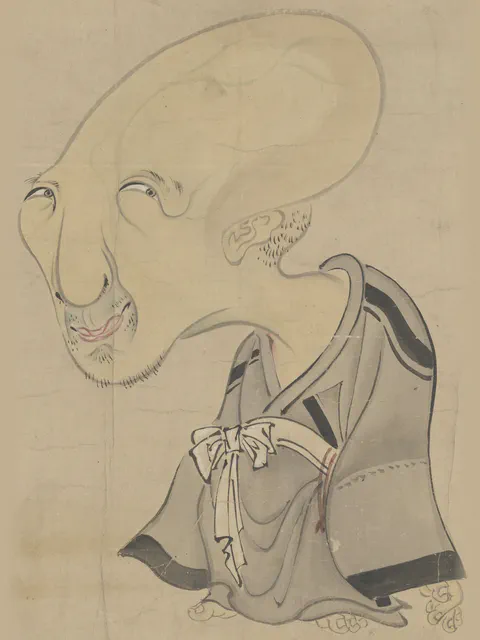
A long-headed old man stepping from a palanquin in the Edo scrolls and Sekien's 1776 print, a floating ball off Okayama, and the supreme-commander title added in the twentieth century.

Nobusuma
野衾(のぶすま)
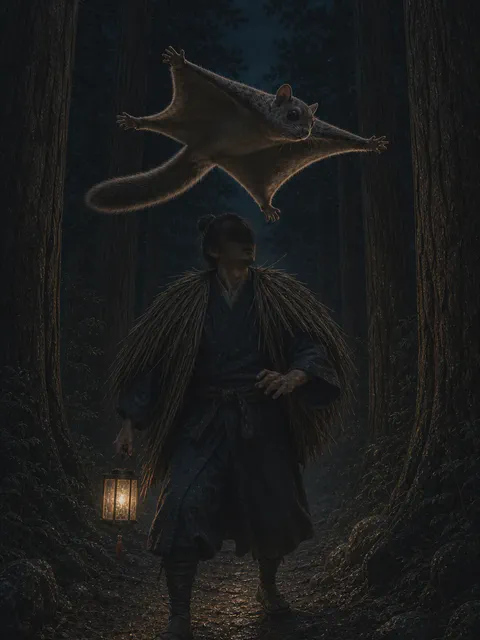
A 1938 Tokyo record describes something like a flying squirrel that drifts down onto a traveler and covers the eyes and mouth — and stops there.