
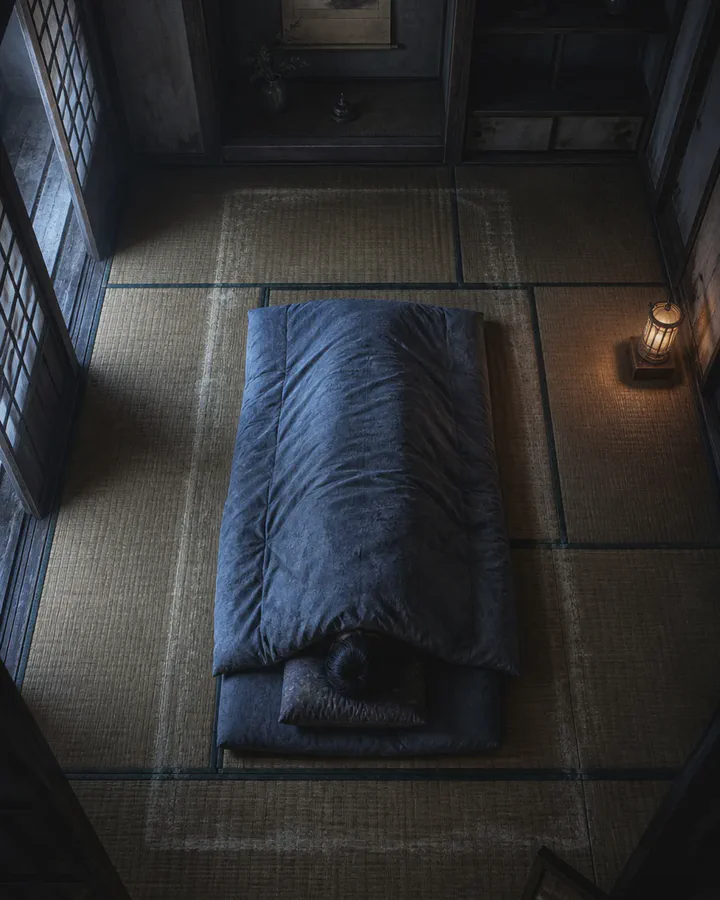
Makura-gaeshi (枕返し): The Room That Turns Its Sleepers Around
Japan's pillow-turning yokai — one experience, four explanations
枕返し(まくらがえし) Makura-gaeshi ASCII: Makura-gaeshi
Also known as: Makura gaeshi
Pronunciation: mah-koo-rah-GAH-eh-shee
Makura-gaeshi (枕返し, “pillow-turner”) is the Japanese yokai blamed when you go to sleep facing one way and wake facing the other. In Niigata it happened in certain houses: lie down with the alcove above your head, wake with it at your feet. In Ehime it was the fault of a house built on an ill-omened ridge line; in the Tōhoku it was the work of the zashiki-warashi, the child spirit of old houses, who turns your pillow but harms no one; in Ibaraki it was a three-hundred-year-old room where a feudal lord had once slept. The reversal never changes. The culprit always does.
Quick Facts
- Habitat
- House
- Region
- Niigata, Tobe (Ehime), Hitachiōta (Ibaraki), Tōhoku
- Recorded period
- 1935 folklore record, 1956 prefectural history, 1985 folklore record, 1998 oral record
- Nature
- Neutral
- Danger rating
- If you meet one
- Do not sleep in that room. The formal room of the old main house was not to be slept in. In the article
The danger rating is an editorial summary made for readability. It is not an objective measure found in folklore sources.
Watch the Short
What is Makura-gaeshi?
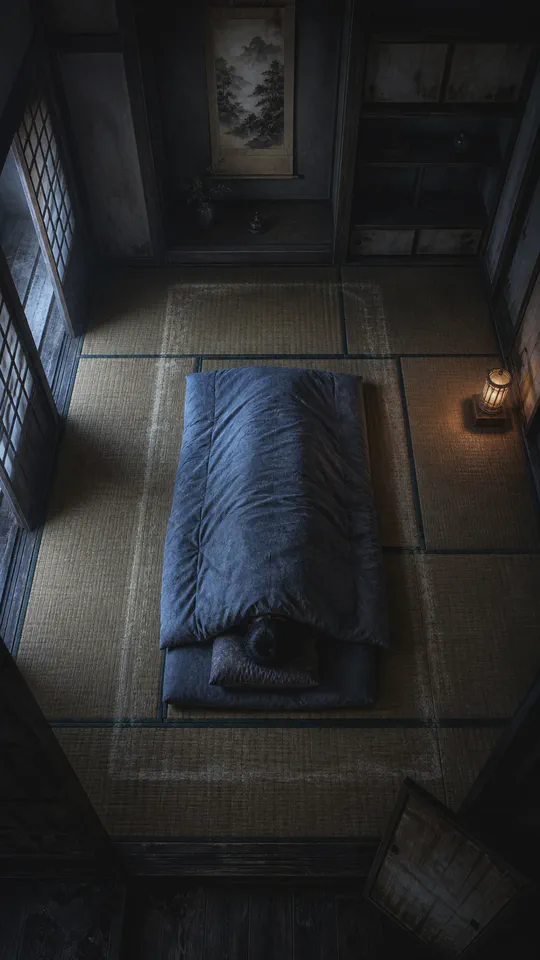
You lie down at night in the formal room of an old house with your head toward the tokonoma, the alcove where the scroll hangs, as a guest should. You sleep. In the morning the alcove is at your feet. Nobody came in. Nothing woke you. You have been turned end for end in your sleep, bedding and all, and the room is exactly as it was.
That is the makura-gaeshi, as people in the Agano and Kashiwazaki districts of Niigata described it in 1935: it happens in certain houses, and everyone knows which. The shape of the event is the same everywhere it is recorded. Everything else depends on which house you were sleeping in.
What does makura-gaeshi mean?
The name is written 枕返し: makura, a pillow, and kaesu, to turn over or turn back. The pillow-turner. It is pronounced mah-koo-rah-GAH-eh-shee. What gets turned, in most of the records, is not the pillow but the sleeper.
Four rooms
Niigata, 1935. The simplest version, above: the alcove at your head when you lie down and at your feet when you wake, in certain houses.
Tobe, Ehime, 1985. The cause is the ground. The ridge line running along the great mountain is called the nawame, and it is shunned as a demonic line. A house built on the nawame turns its sleepers; in the morning they find themselves lying the other way round.
Tōhoku, 1956. Miyagi’s prefectural history describes the zashiki-warashi, the red-faced child spirit of old houses across Iwate and its neighbours, who brings prosperity while it stays. Sleep in its room and it may turn your pillow or press down on you from above — but it does no one any harm.
Hitachiōta, Ibaraki, 1998. A family remembered the main house they had pulled down a few years before, about three hundred years old. Sleep in its formal room and you were turned: head to the south when you lay down, head to the north when you woke. Perhaps, the speaker thought, because the lord Tokugawa Mitsukuni had once stayed there, and the room was not meant to be slept in.
Appearance
There isn’t one. None of the four records describes a figure. In Niigata and Ehime there is not even a culprit — a house does it, or the land under the house. Only the Tōhoku record names someone, and even there nobody is recorded seeing the child at the pillow. Our short shows the room, the bedding and the morning. The only figure is a child’s shadow on a paper screen, gone before dawn.
Behavior and abilities
- It reverses the sleeper. The one thing every record agrees on.
- It belongs to a place. A particular house, room or ridge. Sleep elsewhere and nothing happens.
- It never wakes you. The turning is discovered, not witnessed.
Weaknesses and countermeasures
No remedy is recorded, and none of these accounts seems to need one. The Ibaraki family’s explanation carries its own answer — the room was not for sleeping. The Ehime record implies another: do not build on the nawame. The Tōhoku record says outright that the spirit does no harm. What makes the reversal frightening is not what follows it. It is waking in a position you did not choose, in a room that has plainly been paying attention to you all night.
Documented tradition and later imagery
Documented tradition. Sleepers found reversed in the morning, attributed to certain houses (Agano and Kashiwazaki, Niigata, 1935); to a house built on the shunned nawame ridge line (Tobe, Ehime, 1985); to the harmless zashiki-warashi of old houses (Miyagi prefectural history, 1956); and to a three-hundred-year-old room a lord once slept in (Hitachiōta, Ibaraki, 1998). None describes injury.
Later imagery. Modern yokai books give the makura-gaeshi a body — a small child or a mischievous figure at the pillow — and sometimes a darker reputation, with stories in which being turned around is fatal. The records are quieter and harder to shake. You slept. The room did not. Tonight, notice which way your pillow points.
Sources and further reading
- Fieldwork collection Makura-gaeshi, record 0780003 (external link) International Research Center for Japanese Studies Hatano Denpachirō, "Kaii attached to houses", Koshiji 1-3 (1935), Niigata. A sleeper who lay with the alcove at their head wakes with it at their feet; said to happen in particular houses.
- Fieldwork collection Nawamesuji and makura-gaeshi, record 0200247 (external link) International Research Center for Japanese Studies Iyo no Minzoku 40 (1985), Tobe, Ehime. A house built on a ridge line called nawame turns its sleepers around; they wake lying the other way.
- Fieldwork collection The pillow-turning room, record 2470140 (external link) International Research Center for Japanese Studies Mukashibanashi Densetsu Kenkyū 19 (1998), Hitachiōta, Ibaraki. A main house about three hundred years old; a sleeper laid head-south woke head-north.
- Fieldwork collection Zashiki-warashi, record C0411051-000 (external link) International Research Center for Japanese Studies Miyagi Kenshi, Minzoku 3 (1956). Sleeping in a zashiki-warashi's room can mean having one's pillow turned or being pressed down, but the spirit does no harm.
Where it was recorded
- 1935
Agano and Kashiwazaki, Niigata
Folklore record
Alcove at your head when you lie down, at your feet when you wake
- 1985
Tobe, Ehime
Folklore record
House on the shunned nawame ridge turns its sleepers
- 1998
Hitachiōta, Ibaraki
Folklore record
Three-hundred-year-old room where Mitsukuni once slept
- 1956
Iwate, Iwate
Folklore record
Zashiki-warashi turns the pillow but harms no one
Places named in the records behind this article. Coordinates are approximate. View on the map
Records behind this article
On the timeline
In the glossary
In manga
- GeGeGe no Kitarō ゲゲゲの鬼太郎 Keeps the traditional forms, invents the stories
- Kiitarō Shōnen no Yōkai Enikki 奇異太郎少年の妖怪絵日記 Keeps the traditional forms, invents the stories
- Mushishi 蟲師 Yokai-adjacent: urban legends and mixed lore
Where to see it
- Ryokufusō, the Inn of the Zashiki-warashi 緑風荘(座敷わらしの宿) Site
Related yokai
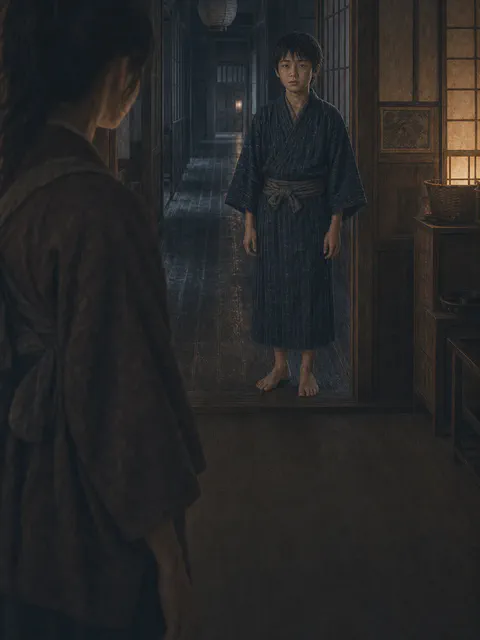
Zashiki-warashi
座敷童子(ざしきわらし)
In Tōno Monogatari, an unfamiliar child crosses the corridor of an old house — and the family that shelters the spirit is said to prosper.
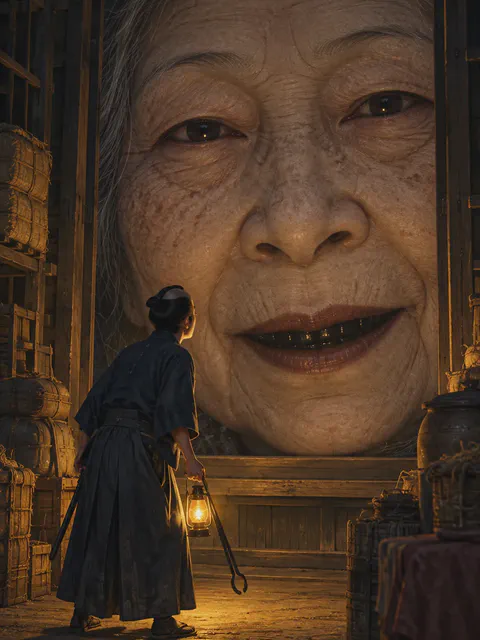
Ōkubi
大首(おおくび)
In the Inō Mononoke-roku, set in Miyoshi in 1749, sixteen-year-old Heitarō faces a month of nightly visitations. One night an old woman's face, teeth blackened, fills his doorway. He takes the fire tongs to it.
Yanari
鳴屋(やなり)
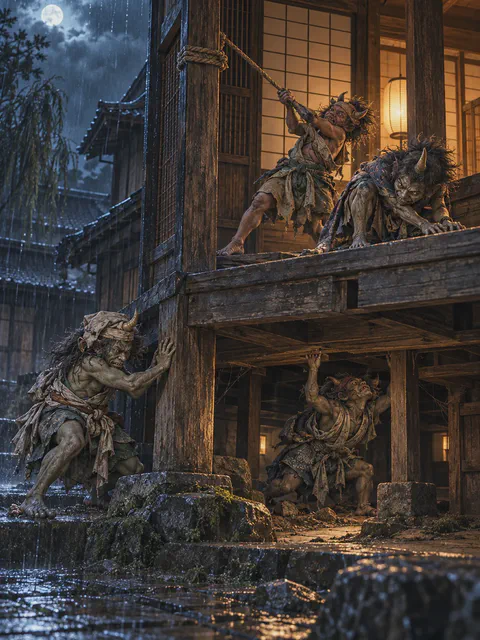
Sekien's 1776 plate shows a crew of small oni at the posts and under the veranda of a wooden house, pushing at the timbers. He named them for the sound a house makes at night and wrote nothing else.