
Keukegen (毛羽毛現): The Hairy Yokai Named for Being Rarely Seen
Sekien's heap of hair, and the pun in its name
毛羽毛現(けうけげん) Keukegen ASCII: Keukegen
Also known as: 希有希見, Keukegen
Pronunciation: keh-OO-keh-gen
Keukegen (毛羽毛現, “hair-feather-hair-appearing”) is a small creature entirely covered in long hair, from Toriyama Sekien’s picture book of 1781. Sekien’s caption is about the name: the creature is hairy all over like Maonü, the hair-covered immortal woman of Chinese legend, so it is keukegen; and the same sounds can be written 希有希見, “rarely existing, rarely seen,” because it is hardly ever there and hardly ever seen. The damp houses and sickness it is now said to bring are later additions.
Quick Facts
- Habitat
- House
- Region
- unspecified
- Recorded period
- Toriyama Sekien's Konjaku Hyakki Shūi (1781)
- Nature
- Unknown
- Danger rating
The danger rating is an editorial summary made for readability. It is not an objective measure found in folklore sources.
Watch the Short
What is Keukegen?
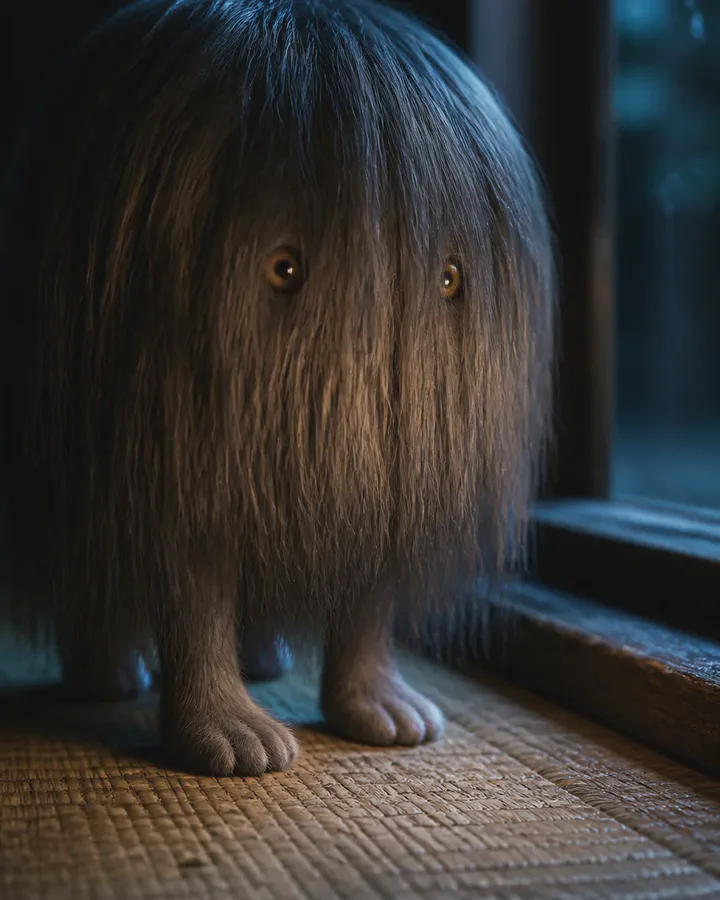
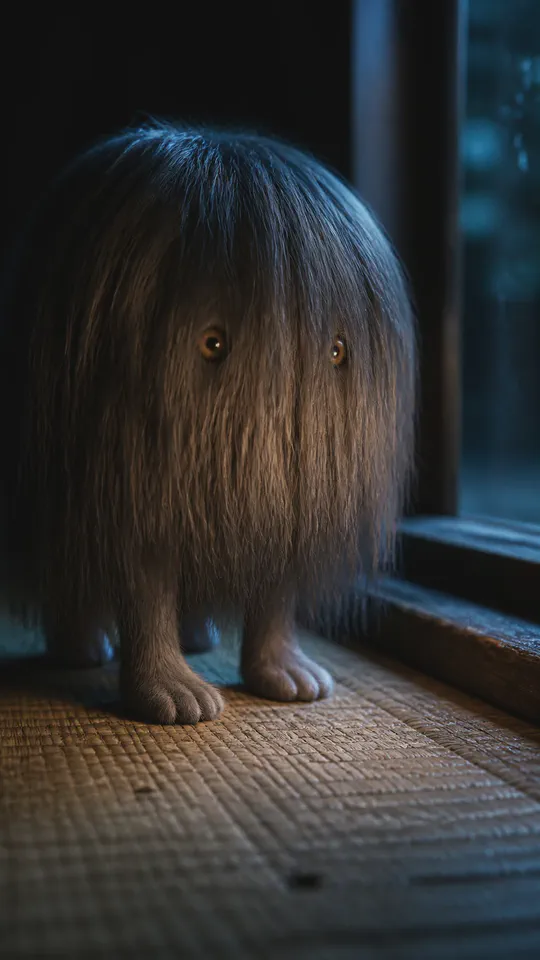
Something small is standing at the edge of the room — a moving heap of long straight hair that falls from the top of it to the floor, with two small eyes somewhere in it and a pair of bare feet showing underneath. It is not doing anything. If you have seen it at all, you are one of very few people who ever have.
That is the keukegen of Konjaku Hyakki Shūi, the third of Toriyama Sekien’s picture books, published in 1781, and almost everything Sekien has to say about it is about its name.
What does keukegen mean?
Sekien writes it 毛羽毛現: hair, feather, hair, appearing — the characters describe what you are looking at. His caption explains it twice. First plainly: the creature has hair growing all over its body like Maonü, the “hairy woman” of Chinese legend, a court lady who fled into the mountains, lived on pine needles, and grew a coat of hair and the gift of flight; so it is called keukegen, the hairy one appearing. Then the second reading: the same sounds can be written 希有希見, “rarely existing, rarely seen,” and it is called that because it is rarely there and rarely seen. It is pronounced keh-OO-keh-gen.
That is the whole caption. No sighting, no place, no harm. The one thing Sekien commits to about the keukegen’s behaviour is that you will probably never meet it, and he gets that out of a pun.
Appearance
Small, and hair all over, covering whatever shape is underneath. Our illustration gives it two small eyes looking out through the hair and bare feet showing below, standing on a tatami floor at a dark threshold.
Behavior and abilities
- It is covered in hair. The first reading of the name.
- It is rarely there and rarely seen. The second.
Neither is an ability. The keukegen is defined by how it looks and how seldom it is looked at.
Weaknesses and countermeasures
None are recorded, because nothing threatening is. A creature whose chief quality is that it is almost never present needs no defence.
Documented plate and later imagery
Documented plate. Toriyama Sekien, Konjaku Hyakki Shūi (1781): a small creature covered in long hair, with a caption comparing it to Maonü, the hair-covered woman of Chinese legend, and punning on its name as “rarely existing, rarely seen.”
Later imagery. The modern keukegen has a home and a threat. It is said to live in damp, neglected houses, under the floor or in dark corners, and to bring illness to the people who live there. That description is repeated widely, and it is not in Sekien’s caption; clear support for it in Edo sources is hard to find. The creature Sekien left is stranger than the one that replaced it: a heap of hair with a name that is also a joke, and the joke says it is hardly ever there.
Sources and further reading
- Library Toriyama Sekien's Illustrated Night Parade of the Demon Horde (external link) National Diet Library Image Bank Overview of Sekien's four illustrated collections, including the 1781 Konjaku Hyakki Shūi that carries the Shinkirō plate.
- Library Hyakki shūi digitized copy (external link) Smithsonian Libraries First volume of the digitized three-volume set of Sekien's 1781 Konjaku Hyakki Shūi.
- Library Yokai drawn by Toriyama Sekien (external link) National Diet Library Image Bank Later visualizations; not evidence that collected accounts agreed on a shape.
Records behind this article
On the timeline
In the glossary
In manga
- GeGeGe no Kitarō ゲゲゲの鬼太郎 Keeps the traditional forms, invents the stories
Related yokai
Akaname
垢嘗(あかなめ)
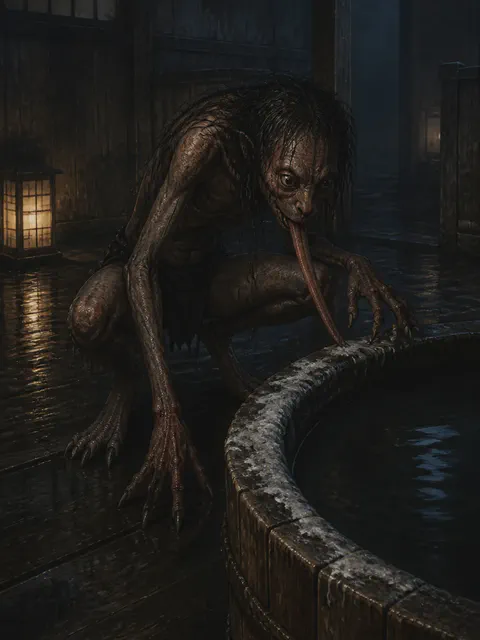
Sekien drew a crouching figure with a long tongue in a bathhouse in 1776 and called it the grime-licker. He wrote nothing else about it — and everything you have been told about dirty bathrooms was added afterwards.
Otoroshi
おとろし
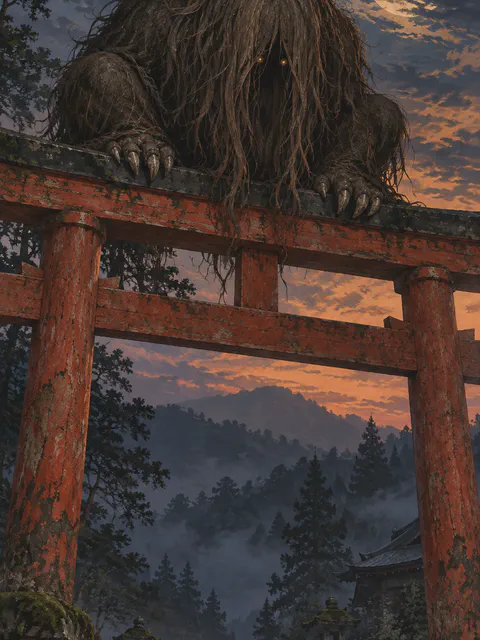
Otoroshi appears in a 1737 scroll and in Sekien's 1776 book as a hunched, hairy creature — on top of a torii in Sekien's version. Neither says what it does. The story about it dropping on the impious was read out of the picture later.
Sunekosuri
脛擦り(すねこすり)
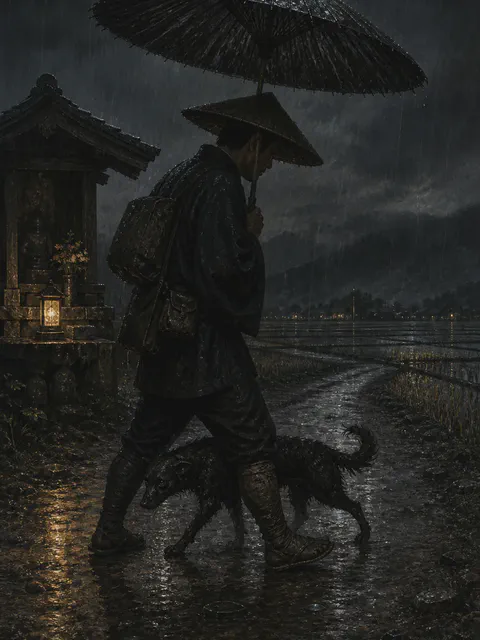
A naturalist writing a national dictionary of yokai in 1935 gave the Sunekosuri of Oda district about one line: dog shaped, on rainy nights, brushing between a traveller's legs as it passes. Everything else you have read about it came later.