
Hone-onna (骨女): The Skeleton With the Peony Lantern
Sekien's bone woman, and the 1666 ghost story she walked out of
骨女(ほねおんな) Hone-onna ASCII: Hone-onna
Also known as: Hone onna, Botan Dōrō
Pronunciation: HOH-neh OHN-nah
Hone-onna (骨女, “bone woman”) is a woman’s skeleton that walks at night carrying a lantern painted with peonies, visiting a living man who sees her as a beautiful woman. Toriyama Sekien drew her in 1779 and, unusually, named his source: the Peony Lantern tale in Asai Ryōi’s Otogi-bōko of 1666, itself adapted from a Chinese ghost story. In the tale a widower in Kyoto takes in a night visitor and keeps her for weeks, until a neighbour looks through a crack in the wall and sees him sitting in the lamplight with a skeleton.
Quick Facts
- Habitat
- House, Street
- Region
- Kyoto (Otogi-bōko)
- Recorded period
- Otogi-bōko (1666), Konjaku Gazu Zoku Hyakki (1779)
- Nature
- Harmful
- Danger rating
- If you meet one
- Look from outside. The neighbour who peered through a crack in the wall saw the skeleton in the lamplight. In the article
The danger rating is an editorial summary made for readability. It is not an objective measure found in folklore sources.
Watch the Short
What is Hone-onna?
A man in Kyoto has lost his wife. One night during the Obon festival he sees a beautiful woman pass his gate, attended by a girl carrying a lantern painted with peonies. He speaks to her. She stays the night, and comes back the next night, and the next, for weeks. The neighbour is the one who looks. Through a gap in the wall he sees the man sitting in the lamplight, talking tenderly to a skeleton.
That is the Peony Lantern tale as Asai Ryōi told it in Otogi-bōko in 1666, and it is the story Toriyama Sekien pointed to when he drew the hone-onna in 1779 — the thing the neighbour saw, dressed and carrying the lantern, walking out at night to keep company with the living.
What does hone-onna mean?
The name is written 骨女: hone, bone, and onna, woman. The bone woman. It is pronounced HOH-neh OHN-nah. The name is Sekien’s label for a figure the tale itself never names; in the story she is a woman with a lantern, and then, from outside, a skeleton.
Sekien’s footnote
Most of Sekien’s figures arrive without explanation. This one came with a family tree. His caption says, in effect: this is the aged skeleton of a woman seen in Otogi-bōko, carrying a peony lantern and consorting with the living — and the original is “The Peony Lantern” in the Chinese collection Jiandeng Xinhua, written in the Ming dynasty. A Chinese ghost story, a Japanese adaptation of 1666, and a picture drawn more than a century later.
Appearance
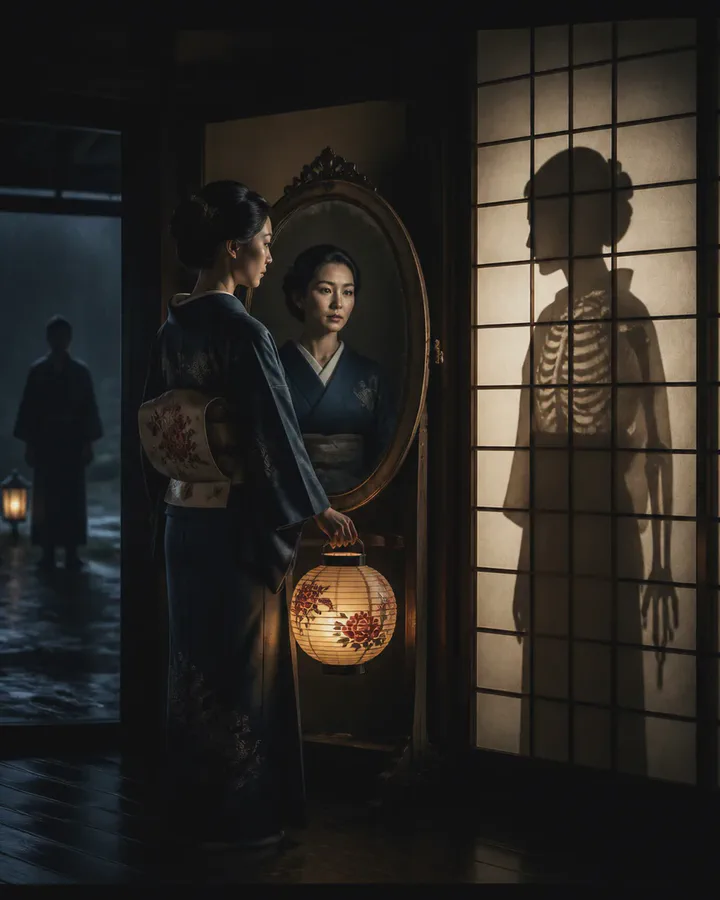
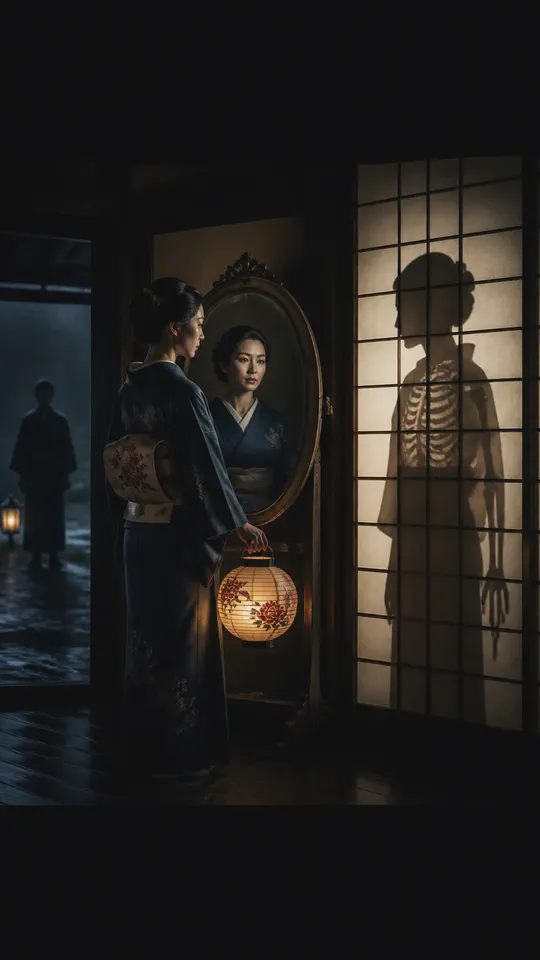
Sekien’s plate shows the skeleton, robed, lantern in hand — what the neighbour saw, not what the lover saw. The peony lantern is the one object passed down intact from the Chinese original through Ryōi to Sekien. Our illustration puts both views in one room: a woman with the lantern in the lamplight, and on the paper screen beside her, the shadow of what she is.
Behavior and abilities
- She returns night after night. The visits, not any single attack, are what the tale is about.
- She is beautiful to one man. How she looks depends on who is looking, and the tale moves between his view and the neighbour’s.
- She carries the peony lantern. It is how she is recognised in every version, and why the story bears its name.
Weaknesses and countermeasures
Sekien records none. In the 1666 tale the one thing that works is looking from outside: the danger can be seen only by someone not caught up in it. What follows the discovery — the priest, the charms on the door, the ending — belongs to the tale rather than to the figure Sekien drew, and his caption stops at the lantern.
Documented plate and later imagery
Documented plate. Toriyama Sekien, Konjaku Gazu Zoku Hyakki (1779): hone-onna, an aged female skeleton with a peony lantern, identified in the caption with the tale in Asai Ryōi’s Otogi-bōko (1666) and, behind it, “The Peony Lantern” in the Chinese Jiandeng Xinhua.
Later imagery. The story went on to a long career of its own. The Botan Dōrō of nineteenth-century storytelling and the kabuki stage added characters and a plot, and it is now one of Japan’s best-known ghost stories; modern yokai books describe the hone-onna as a woman who looks alive only to the man who loves her. The older tale is more uneasy than that rule. Nobody in it can see her clearly from inside the room. If someone you had lost came back tonight, you would open the door, and it would take a stranger to tell you what you had let in.
Sources and further reading
- Library Konjaku Gazu Zoku Hyakki bibliographic record (今昔畫圖續百鬼) (external link) National Diet Library Search Bibliographic record for Sekien's 1779 picture book.
- Museum Toriyama Sekien, Konjaku Gazu Zoku Hyakki (今昔画図続百鬼), 1779 (external link) Tokyo Museum Collection The 1779 sequel to Sekien's illustrated demon catalogue, containing both Kawa-akago and Suiko.
- Academic paper Differences in the other world: comparing Otogi-bōko and Jiandeng Xinhua (external link) National Diet Library Search Bibliographic record for a 2025 study comparing Asai Ryōi's 1666 adaptations with the Chinese collection they came from.
Where it was recorded
- 1666
Kyoto (Otogi-bōko), Kyoto
Legend or tale
Widower's night visitor seen as a skeleton by the neighbour
Places named in the records behind this article. Coordinates are approximate. View on the map
Records behind this article
On the timeline
In the glossary
In manga
- Kiitarō Shōnen no Yōkai Enikki 奇異太郎少年の妖怪絵日記 Keeps the traditional forms, invents the stories
Related yokai
Gashadokuro
がしゃどくろ
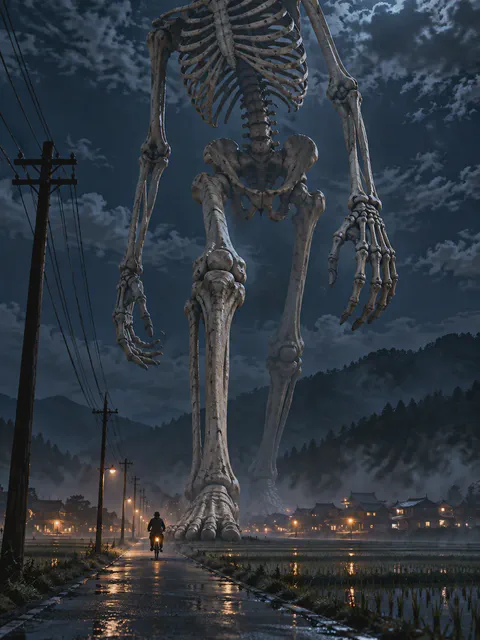
Gashadokuro, the giant skeleton, looks ancient. It was created by the writer Saitō Morihiro in 1966, taken into Mizuki Shigeru's yokai collection in 1968, and later matched to a Kuniyoshi print from the 1840s that never used the name.
Oiwa
お岩(おいわ)
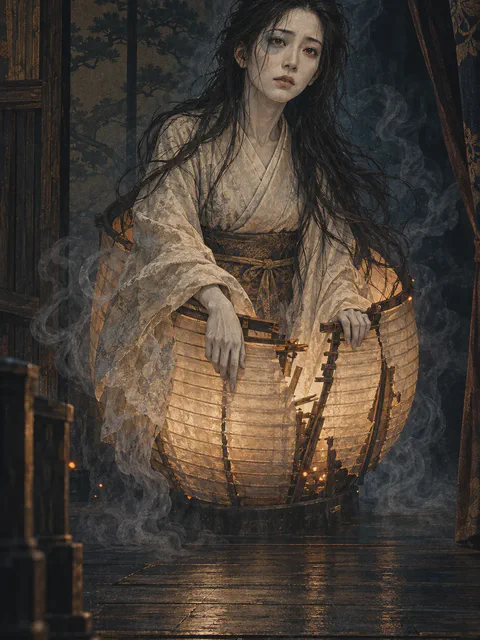
Oiwa is the wronged wife of Tsuruya Nanboku's 1825 kabuki play Tōkaidō Yotsuya Kaidan — poisoned under the name of medicine, betrayed, and returning to pursue her husband. On stage, she emerges from a burning lantern.
Yuki-onna
雪女(ゆきおんな)
A pale woman seen on winter roads, sometimes deadly, sometimes harmless, and never described the same way everywhere.