
Bake-danuki (化け狸): Shukaku and the Kettle That Never Ran Dry
Japan's shape-shifting tanuki, through the monk of Morinji and the Bunbuku Chagama
化け狸(ばけだぬき) Bake-danuki ASCII: Bake-danuki
Also known as: Shukaku, 守鶴, Bunbuku Chagama, 分福茶釜, 文福茶釜
Pronunciation: bah-keh dah-noo-kee
Bake-danuki (化け狸, “changing tanuki”) are the shape-shifting raccoon dogs of Japanese folklore. The best-documented one is Shukaku, a monk of Morinji temple in Tatebayashi who in 1570 produced an iron tea kettle whose hot water never ran out for a gathering of a thousand. Years later he fell asleep too deeply, fur showed on his hands and feet, and a tail slid out of his robe. He was a mujina — or a tanuki — and in 1587 he left. The dancing kettle with a tanuki’s face came three centuries after him.
Quick Facts
- Habitat
- Temple or shrine, House
- Region
- Tatebayashi (Gunma)
- Recorded period
- Morinji temple tradition, 1570 and 1587, Meiji and Taishō fairy-tale adaptations
- Nature
- Helpful
- Danger rating
The danger rating is an editorial summary made for readability. It is not an objective measure found in folklore sources.
Watch the Short
What is a Bake-danuki?
In 1570 the Sōtō Zen temple of Morinji, in Tatebayashi in what is now Gunma, held a service for a thousand people, and the problem was hot water. An old monk named Shukaku brought out an iron kettle and said it would do. However many ladles were drawn from it, it never ran dry. Shukaku had come to the temple with its founder, generations before, and served every abbot since.
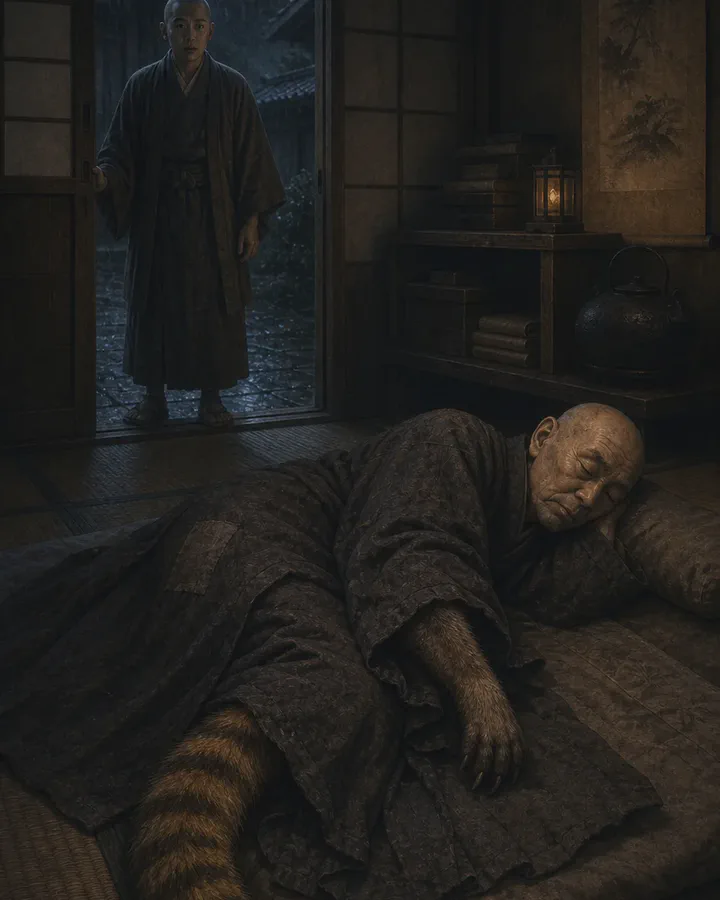
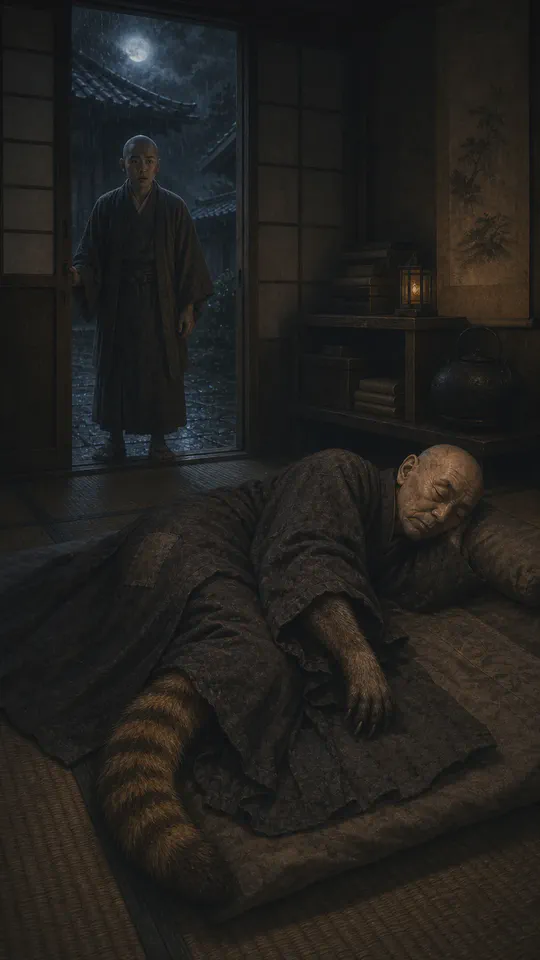
Years later, he fell asleep in the daytime and slept too deeply. Fur came out on his hands and feet. A tail slid from under his robe. Once he knew he had been seen he decided to go, and before he left he showed the monks two visions — the sea battle of Yashima, and the Buddha preaching — and walked out of Morinji in his animal shape on the twenty-eighth day of the second month of 1587, after a hundred and sixty-one years.
That is a bake-danuki as the temple that knew him tells it: not a prankster but a colleague, and the kettle he left behind is still there.
What does bake-danuki mean?
The name is written 化け狸: bakeru, to change shape, and tanuki, the Japanese raccoon dog — a real animal, a small, round, bandit-masked canid of the woods and farmland, and not the North American raccoon. A bake-danuki is a tanuki that changes. The word is a broad modern label for every transforming tanuki in the stories: the trickster, the drummer in the hills, the monk, the kettle.
Morinji’s own word for Shukaku is mujina, with tanuki given as another telling. Mujina has never named one precise animal — a badger, a raccoon dog, something in between — and the temple keeps both words.
Appearance
The Morinji Shukaku is a monk first and an animal second. Our illustration shows an elderly man in a patched brown robe asleep beside a plain black iron kettle, with furred forelegs and one tail coming out of the cloth. The kettle has no face. The animal, when it appears, is an ordinary Japanese tanuki, natural in size, one tail, four feet on the ground.
Behavior and abilities
- He served in human form for generations, through abbot after abbot.
- He brought the kettle that would not empty, in 1570, and said its water carried eight blessings — fortune and long life among them.
- He slept and was seen. Fur and a tail, and the secret was out.
- He left with a show. Yashima and the Buddha’s sermon, and then the road.
Nothing in the temple’s telling has him harm anyone. The story is about trust that ends when a body is seen, and about what the visitor gave before it did.
The Bunbuku Chagama
The famous Bunbuku Chagama — the “lucky tea kettle” with a tanuki’s head, paws and tail sticking out of it, walking a tightrope for a paying crowd — is a different story told about the same temple. Iwaya Sazanami turned the Morinji tradition into a children’s tale in the Meiji and Taishō periods, and the kettle became the animal. A folklore record of 1935 keeps a version shaped by that one: a transformed kettle passes through a dealer’s hands and earns him a fortune on the stage.
In Morinji’s own account, the monk is the tanuki and the kettle is a kettle. Putting the dancing kettle into the hall in 1570 makes both stories harder to see.
Weaknesses and countermeasures
None. Sleep exposed him, but nobody used it as a weapon, and nobody drove him out; he chose to go. There is no salt, fire, dog or sutra in the telling, because there was nothing to defend against. A list of ways to beat Shukaku would miss the point of a monk who worked at the temple for a century and a half and left it a kettle.
Documented tradition and later imagery
Documented tradition. Morinji’s account of Shukaku: a monk who served the temple from its founding, produced the inexhaustible kettle for the gathering of a thousand in 1570, showed a mujina’s (or tanuki’s) fur and tail in his sleep, and left in 1587 after showing the monks two visions. Separately, the Meiji–Taishō fairy tale Bunbuku Chagama and a 1935 folklore record of the performing kettle.
Later imagery. The comic kettle with a face has become the picture, and the modern tanuki with it — fat, grinning, and never to be trusted. The temple’s tanuki is older and quieter: a hundred and sixty-one years of service, one afternoon nap, and the decency to leave.
Sources and further reading
- Primary text Bunbuku Chagama and Morinji (external link) Sōtō Zen Morinji Temple Morinji's official account of Shukaku, the inexhaustible kettle used in 1570, his revealed mujina or tanuki form, his 1587 departure and the later fairy tale.
- Primary text History of Morinji (external link) Sōtō Zen Morinji Temple The temple's history connecting founder Dairin Shōtsū, Shukaku and Morinji's establishment in Tatebayashi.
- Fieldwork collection Bunbuku Chagama and related tanuki accounts, record 1232860 (external link) International Research Center for Japanese Studies A 1935 Gunma record and related examples showing how the performing-kettle tale and the Shukaku temple tradition developed in distinct retellings.
Where it was recorded
- 1570
Morinji temple, Tatebayashi, Gunma
Legend or tale
The monk Shukaku and the kettle that never ran dry
Places named in the records behind this article. Coordinates are approximate. View on the map
Records behind this article
On the timeline
In the glossary
In manga
- Ayakashi Triangle あやかしトライアングル Uses the names, reinvents the rest
- GeGeGe no Kitarō ゲゲゲの鬼太郎 Keeps the traditional forms, invents the stories
- The Great Yokai War: Guardians 妖怪大戦争 ガーディアンズ Uses the names, reinvents the rest
- Hozuki's Coolheadedness 鬼灯の冷徹 Uses the names, reinvents the rest
- Inuyasha 犬夜叉 Uses the names, reinvents the rest
- Kakuriyo: Bed & Breakfast for Spirits かくりよの宿飯 Uses the names, reinvents the rest
- Kamisama Kiss 神様はじめました Uses the names, reinvents the rest
- Kemono Jihen 怪物事変 Uses the names, reinvents the rest
- Kiitarō Shōnen no Yōkai Enikki 奇異太郎少年の妖怪絵日記 Keeps the traditional forms, invents the stories
- Nura: Rise of the Yokai Clan ぬらりひょんの孫 Uses the names, reinvents the rest
- Otome Yōkai Zakuro おとめ妖怪 ざくろ Uses the names, reinvents the rest
Where to see it
- Morinji 茂林寺 Shrine or temple
Related yokai
Kitsune
狐(きつね)
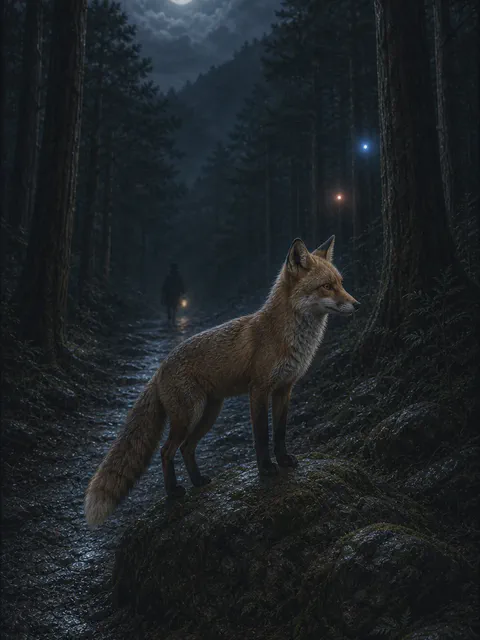
A 1930 account from Toyooka describes blurred blue or red foxfire moving restlessly from beyond the mountain to somewhere close by.
Kawauso
川獺(かわうそ)
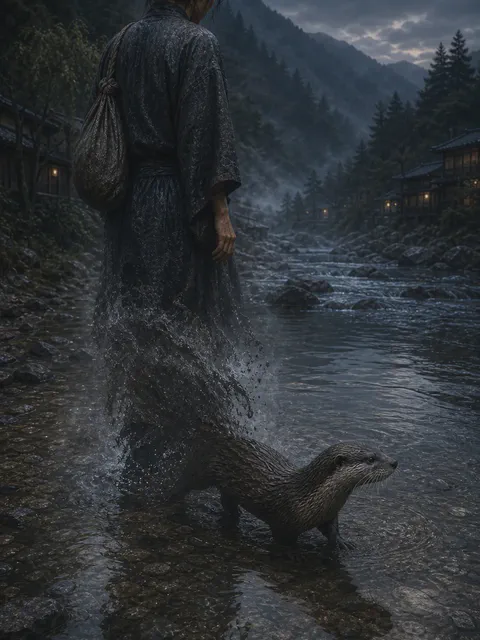
In Gunma in 1956 the kawauso was a figure on a riverside road at dusk who glances back and beckons — not a traveler, but an otter in human form.
Bakeneko
化け猫(ばけねこ)
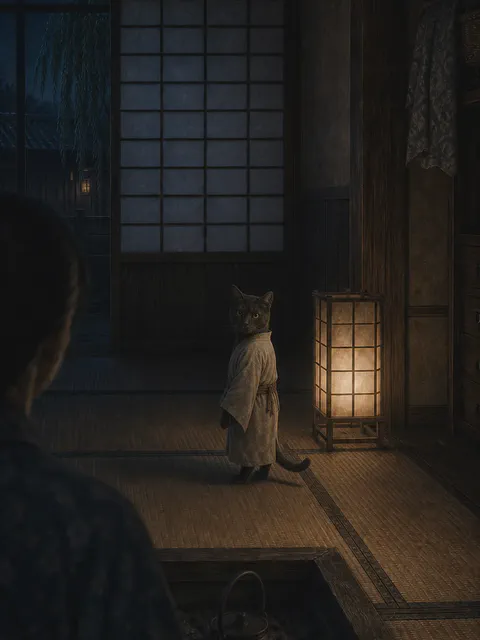
Stories of old cats that speak, perform, dress like people or take human form—and the separate cat yokai they keep getting confused with.