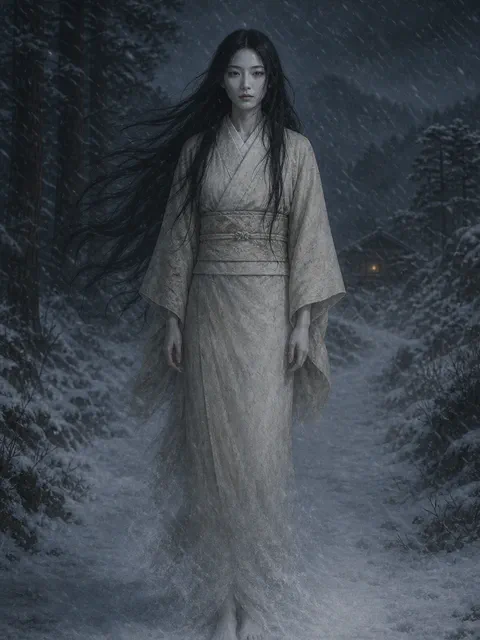
Yuki-onna
雪女(ゆきおんな)
A pale woman seen on winter roads, sometimes deadly, sometimes harmless, and never described the same way everywhere.
- 1931
Chino
Folklore record
Harmless snow spirit that lays felled trees across the valley
長野県
5 yokai with records here · Chūbu · View on the map
雪女(ゆきおんな)
A pale woman seen on winter roads, sometimes deadly, sometimes harmless, and never described the same way everywhere.
Harmless snow spirit that lays felled trees across the valley
鎌鼬(かまいたち)
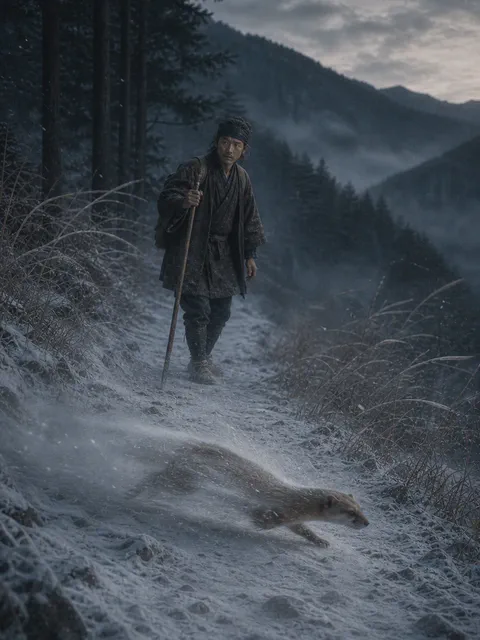
In Nagano in 1955 the kamaitachi was a weasel so fast that no one had ever seen it — known only by the clean cut it leaves on a stumbling traveler's shin.
Painless cut on a windy road
小豆洗い(あずきあらい)
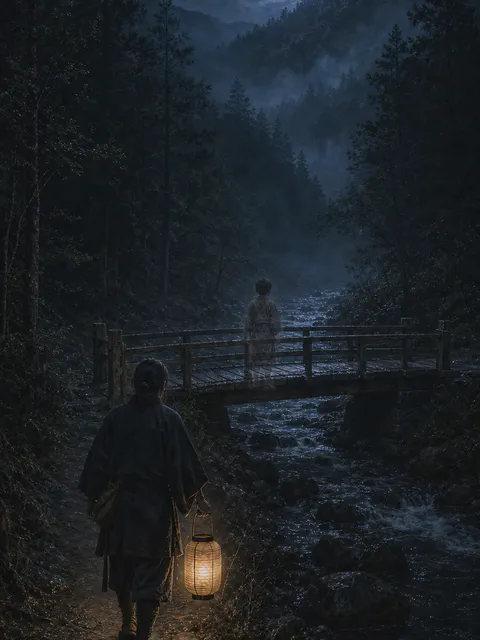
A bean-washing sound repeats beside a dark stream, but the person making it cannot be found.
Bean-washing sound at the water's edge
Boy who vanished when spoken to; beans heard at the same spot
Washer with a black towel over its head at the stream
赤マント(あかマント)
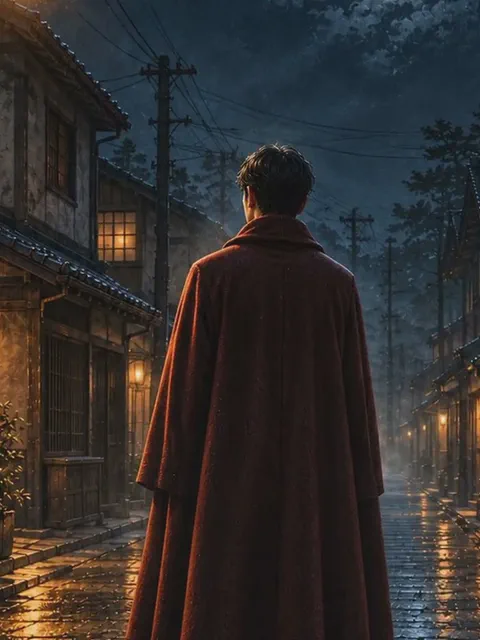
The red-cloaked man of a Tokyo rumour in February 1939, denied on the radio by the police and spread by schoolchildren across the capital, and the school-toilet Aka Manto of the 1980s who asks whether you want the red cloak or the blue.
A school where red cloak or blue cloak was asked, remembered from the mid-1930s in a collection of 1987
野槌(のづち)
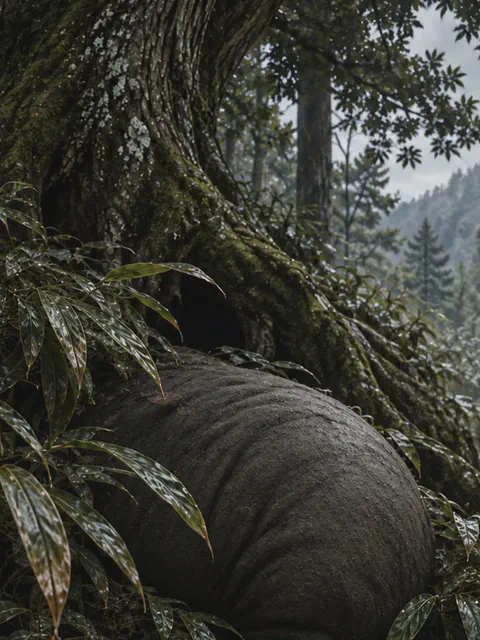
The yokai with four bodies: the thick, short monster that comes out of the dwarf bamboo in a 1935 Nagano record, the field spirit of the Kojiki, the mouth-only beast a lax monk of Mount Hiei was reborn as, the handle-less mallet of a snake in the Yoshino mountains of 1712, and the rolling nozuchi of Gifu, Nara and Wakayama that the word tsuchinoko later absorbed.
A monster with a thick trunk and a short length suddenly appears from the shade of old trees, dark even by day, or from the dwarf bamboo