
Identify a Yokai by What It Looks Like
No face, a long neck, one leg, an umbrella, a wheel, a wall
You saw it in a print, a game or an anime, and you do not know its name. Start from what it looks like.
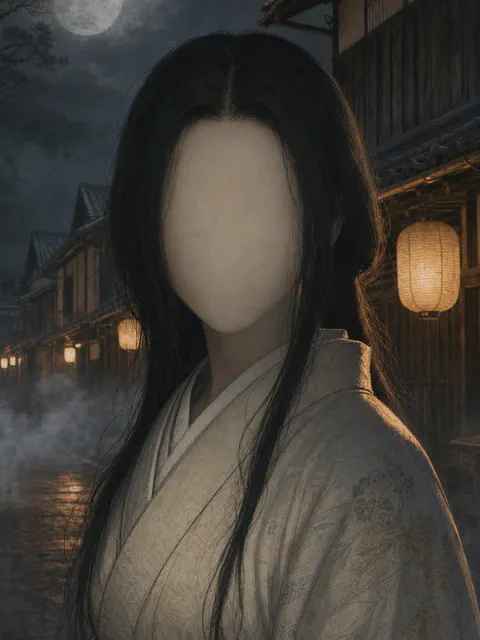
- No face — the noppera-bō: an ordinary-looking person whose face is a blank.
- A long neck — the rokurokubi, whose neck stretches at night.
- A second mouth — the futakuchi-onna, with a mouth at the back of her head.
- Eyes in the palms of the hands — the tenome.
- Eyes all over a paper screen — the mokumokuren.
- A giant head — the ōkubi, a face far too large for any body.
- One leg — the ippon-datara, which leaves a single line of footprints in the snow.
- An umbrella — the karakasa-kozō: one leg, one eye and a lolling tongue.
- A paper lantern — the chōchin-obake.
- A burning wheel with a face — the wanyūdō.
- A wall — the nurikabe, which blocks the road at night.
- A flying strip of cloth — the ittan-momen.
- Something that drops onto your face — the nobusuma, like a flying squirrel or a bat.
- Wings — the tengu.
- Horns — the oni, the bull-headed ushi-oni, and the small oni called yanari.
- Covered in hair — the keukegen and the otoroshi.
- A giant — the mikoshi-nyūdō, taller the further you look up; the daidarabotchi, big enough to carry mountains; and the giant skeleton, the gashadokuro.
- Hanging head-down from the ceiling — the tenjō-sagari.
- Only the upper half of a body — Teke Teke.
- Nothing at all, only footsteps — Betobeto-san.
25 yokai
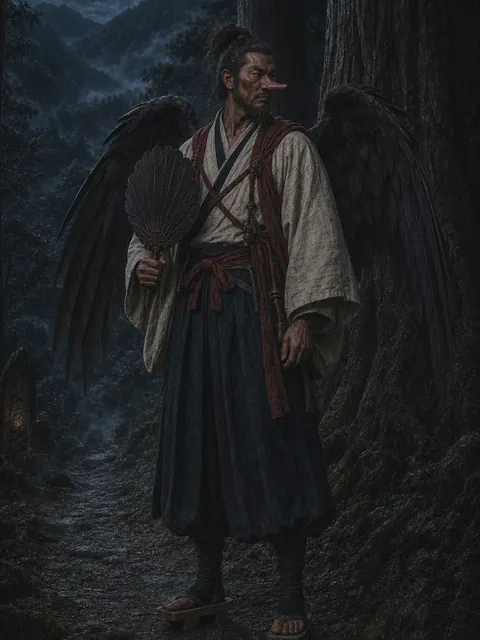
Tengu
天狗(てんぐ)
A mountain being associated with flight, impossible voices, disappearances, and more than one familiar face.
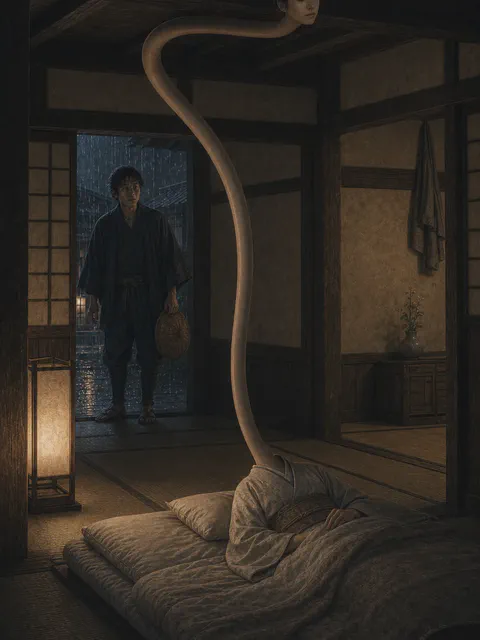
Rokurokubi
轆轤首(ろくろくび)
A seemingly human figure whose neck stretches at night—and one name that once covered more than one uncanny form.
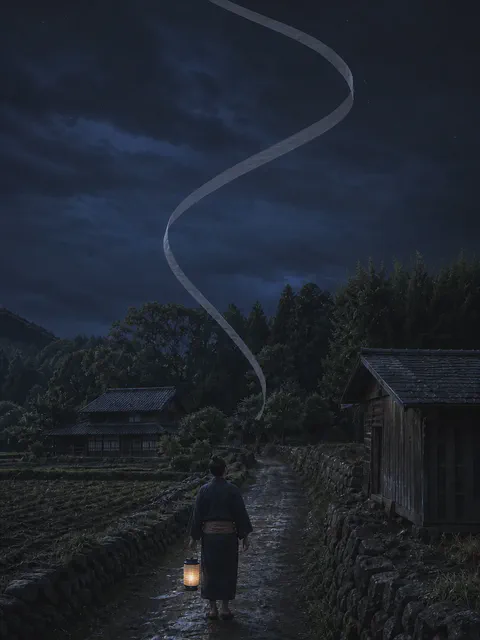
Ittan-momen
一反木綿(いったんもめん)
A white bolt of cloth that flutters across a rural night road, dazzles a traveler and attacks.
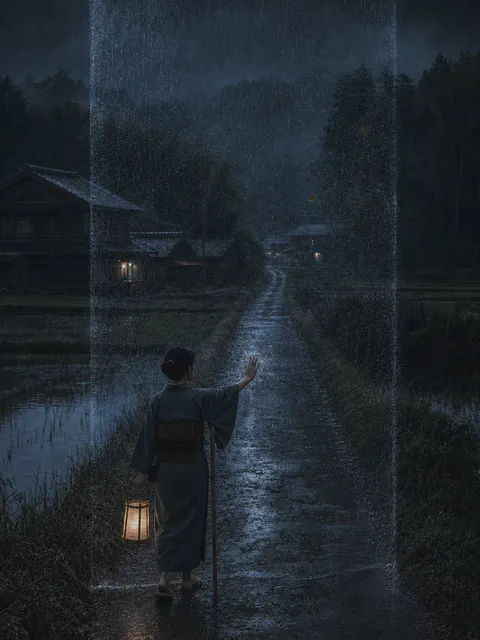
Nurikabe
塗り壁(ぬりかべ)
A night-road obstruction that stops travelers like a wall, though the early record does not describe a visible body.
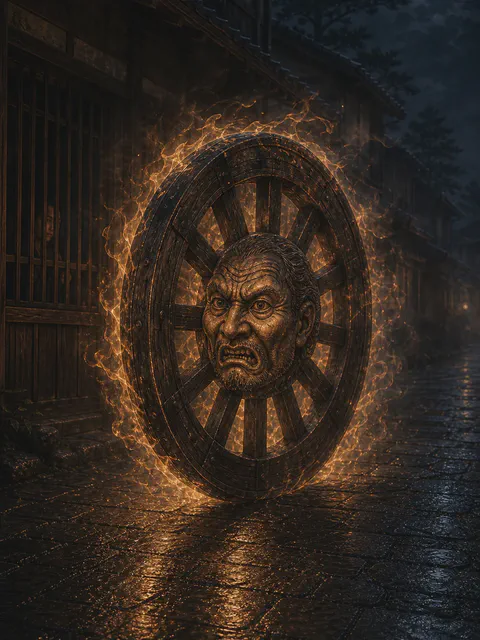
Wanyūdō
輪入道(わにゅうどう)
In Toriyama Sekien's 1779 picture book, a single ox-cart wheel rolls through the night by itself — and anyone who sees it is said to lose their soul.
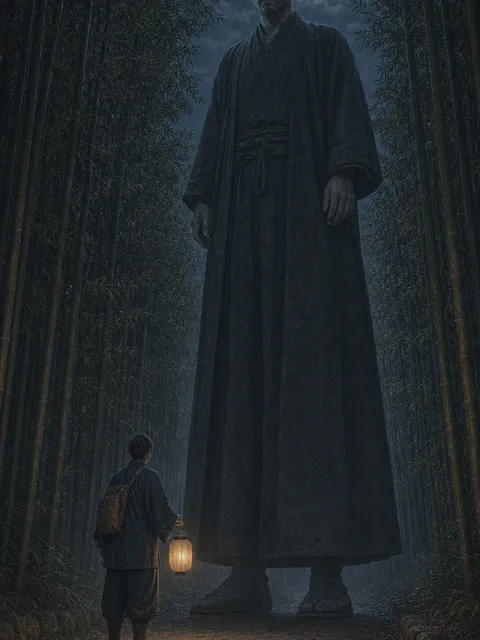
Mikoshi-nyūdō
見越入道(みこしにゅうどう)
A 1938 Nagasaki record warns of bamboo rustling over a night road and a looming figure that must be recognized aloud.
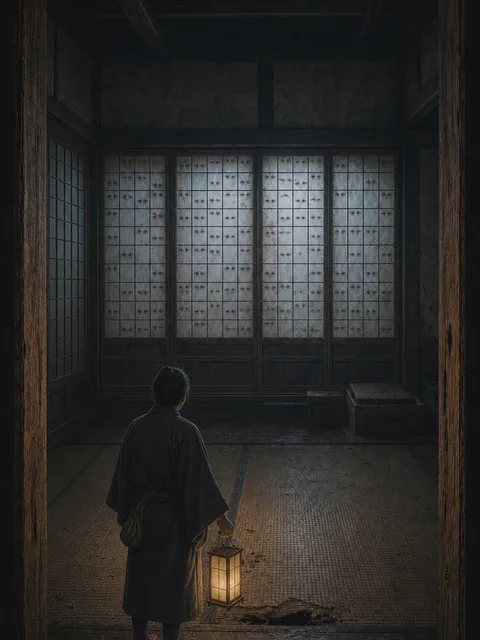
Mokumokuren
目目連(もくもくれん)
Rows of human eyes appear across old shoji in Toriyama Sekien's 1781 picture-book image.
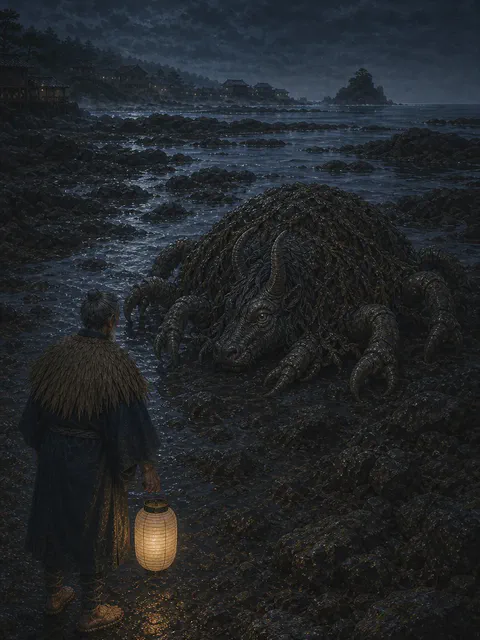
Ushi-oni
牛鬼(うしおに)
Toriyama Sekien's 1776 print shows a bull-like head on a squat clawed body at the water's edge — and tells us nothing else about it.
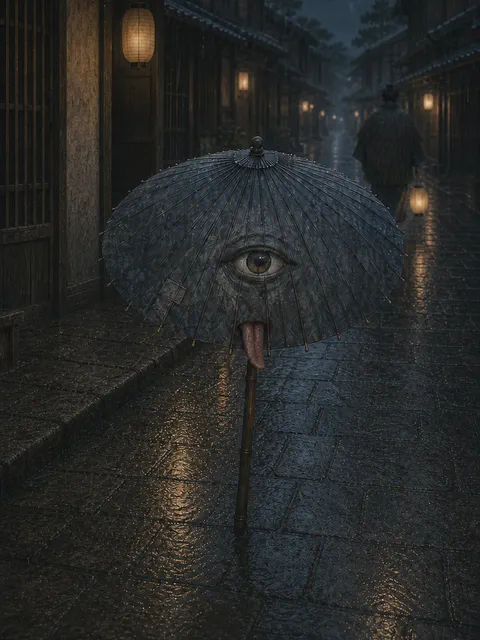
Karakasa-kozō
唐傘小僧(からかさこぞう)
An 1857 Osaka print shows a kabuki actor playing a one-legged umbrella monster — the clearest history of a yokai known through pictures rather than encounters.
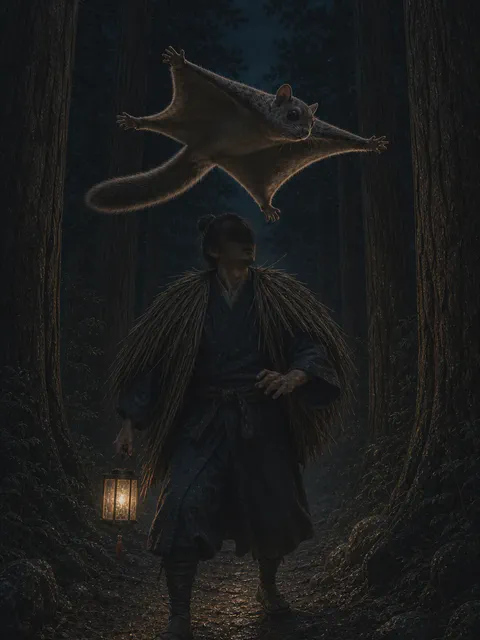
Nobusuma
野衾(のぶすま)
A 1938 Tokyo record describes something like a flying squirrel that drifts down onto a traveler and covers the eyes and mouth — and stops there.
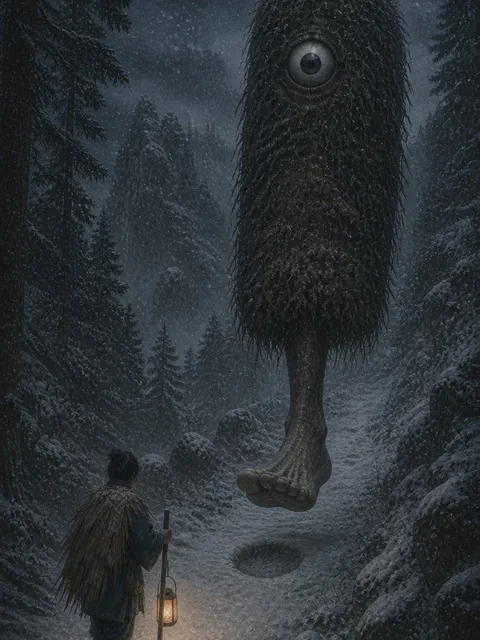
Ippon-datara
一本だたら(いっぽんだたら)
In the Kii mountains a one-legged thing leaves enormous single tracks in the snow — and Yanagita Kunio, reporting them, declined to conclude a one-legged creature from footprints alone.
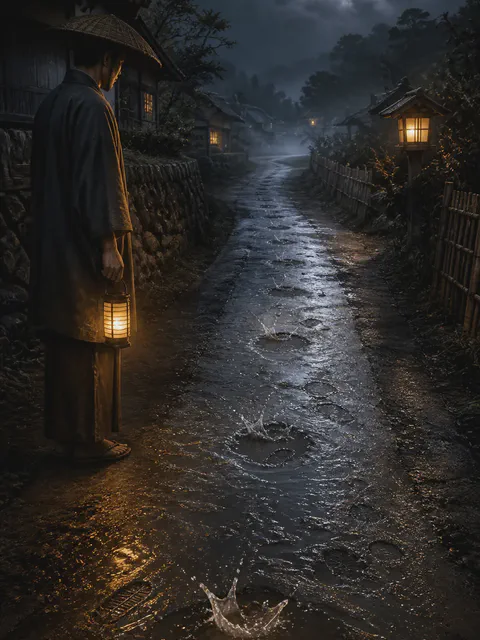
Betobeto-san
べとべとさん(べとべとさん)
On a night road in Uda you hear a bita-bita footfall coming along behind you. There is nobody there. Step aside, say the words, and it stops — which is the entire record.
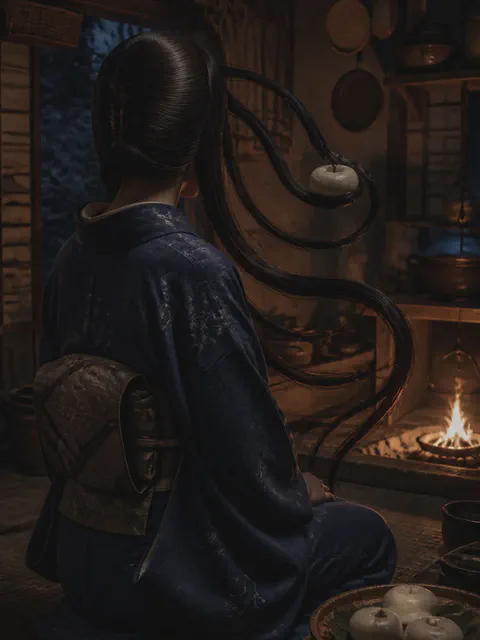
Futakuchi-onna
二口女(ふたくちおんな)
The 1841 Ehon Hyaku Monogatari made Futakuchi-onna a stepmother punished with a mouth at the back of her head. Folktales of the wife who eats nothing, recorded in the twentieth century, give the same hidden mouth to brides who turn out to be snakes, spiders, and oni.
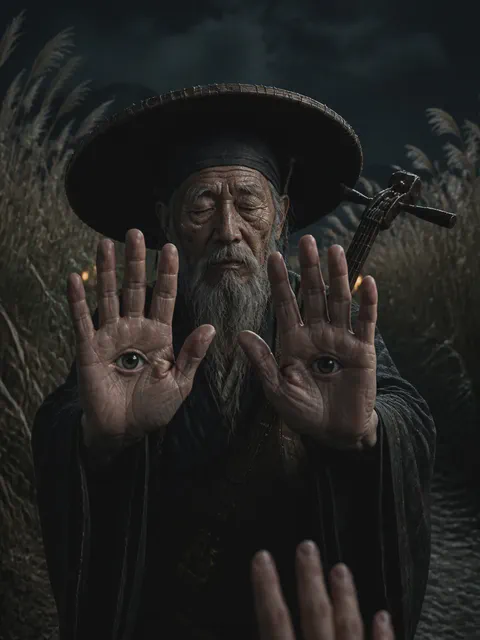
Tenome
手の目(てのめ)
Sekien's 1776 plate shows an elderly blind figure with a biwa on his back, holding out two palms, each with an open eye. He gave it a name and nothing more; the story of a murdered man hunting his killer came later.
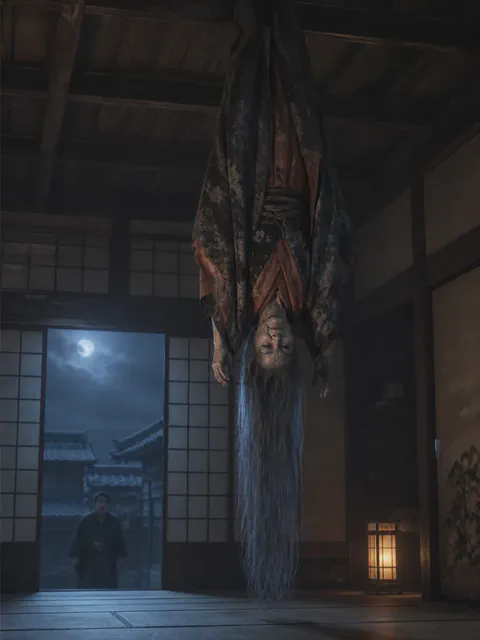
Tenjō-sagari
天井下り(てんじょうさがり)
In 1779 Sekien drew an old woman hanging upside down from the ceiling, and wrote a caption that is mostly a joke — about a demon who once escaped through a roof, and a phrase for knocking someone flat.
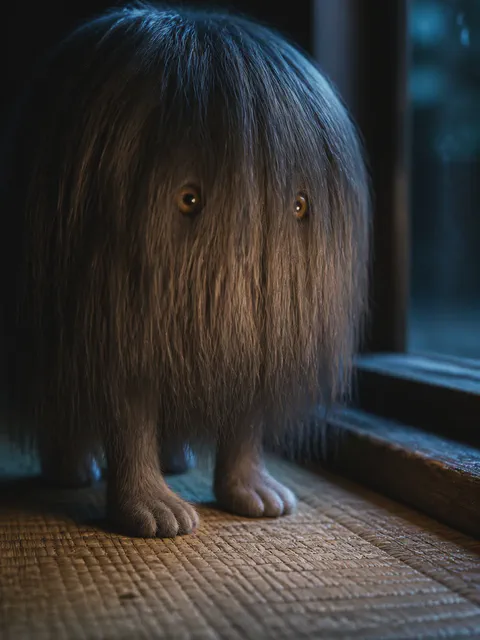
Keukegen
毛羽毛現(けうけげん)
Sekien drew Keukegen in 1781 as a small creature covered in long hair, and spent his caption on its name — which, written another way, means rarely there and rarely seen. The damp houses and disease came later.
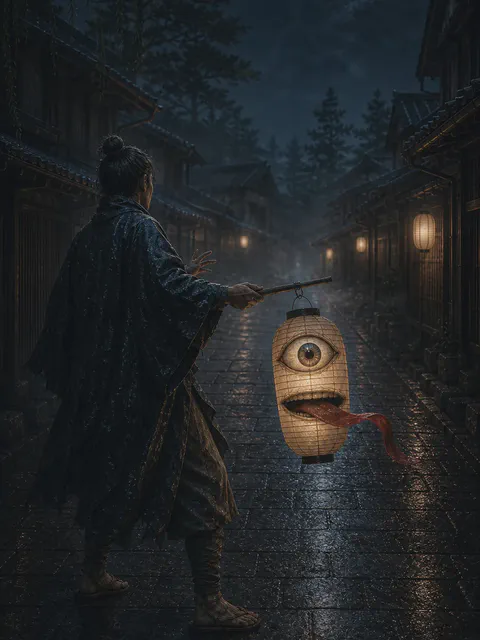
Chōchin-obake
提灯お化け(ちょうちんおばけ)
One of forty-eight monsters on Yoshimori's print Shinban Bakemono-zukushi is a paper lantern with an eye, a mouth, and something coming out of the mouth. That picture is the record — there is no story attached to it.
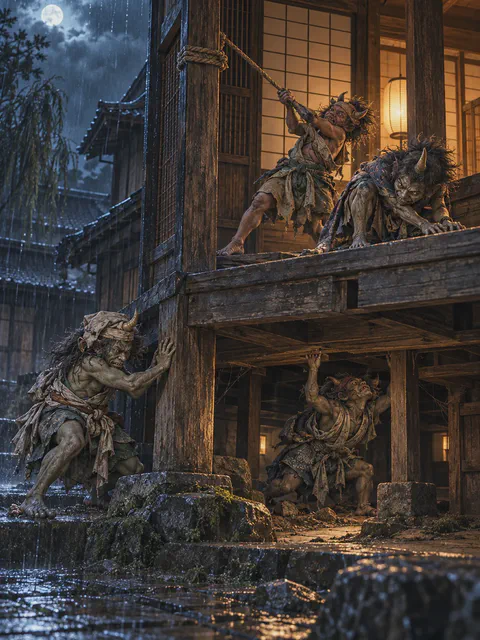
Yanari
鳴屋(やなり)
Sekien's 1776 plate shows a crew of small oni at the posts and under the veranda of a wooden house, pushing at the timbers. He named them for the sound a house makes at night and wrote nothing else.
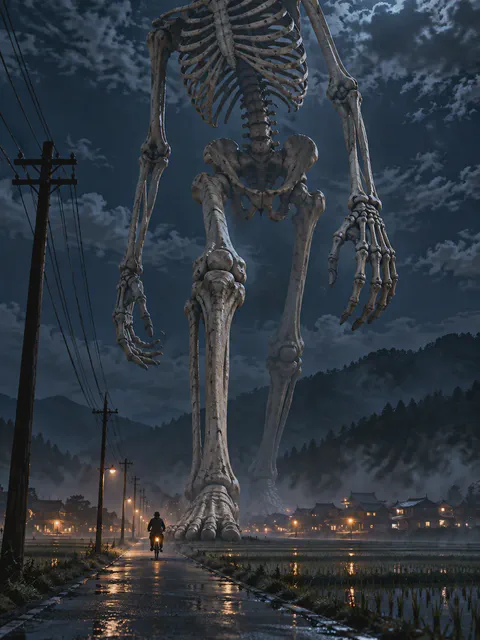
Gashadokuro
がしゃどくろ
Gashadokuro, the giant skeleton, looks ancient. It was created by the writer Saitō Morihiro in 1966, taken into Mizuki Shigeru's yokai collection in 1968, and later matched to a Kuniyoshi print from the 1840s that never used the name.
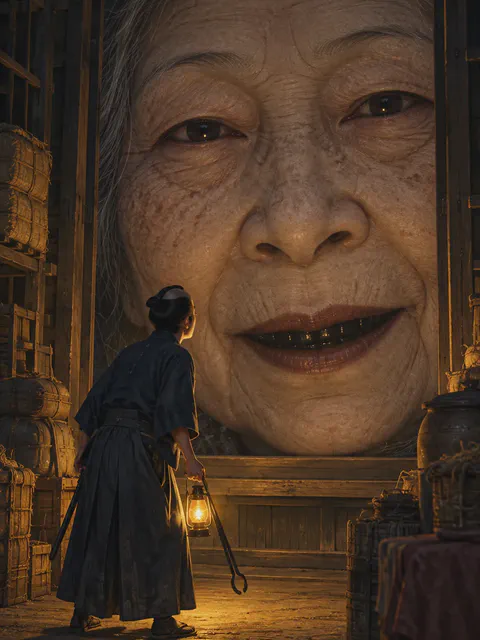
Ōkubi
大首(おおくび)
In the Inō Mononoke-roku, set in Miyoshi in 1749, sixteen-year-old Heitarō faces a month of nightly visitations. One night an old woman's face, teeth blackened, fills his doorway. He takes the fire tongs to it.
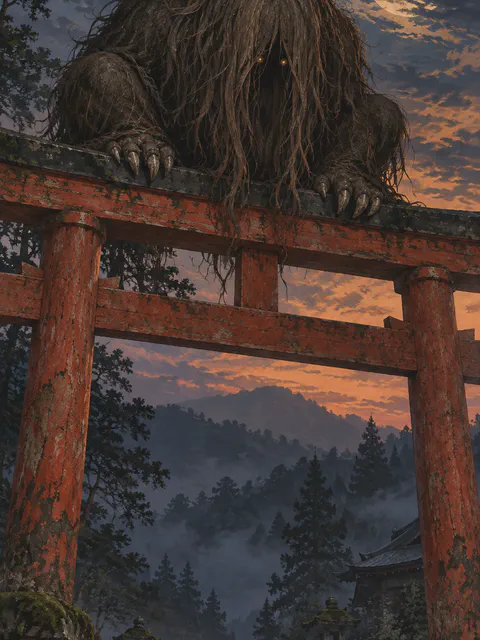
Otoroshi
おとろし
Otoroshi appears in a 1737 scroll and in Sekien's 1776 book as a hunched, hairy creature — on top of a torii in Sekien's version. Neither says what it does. The story about it dropping on the impious was read out of the picture later.
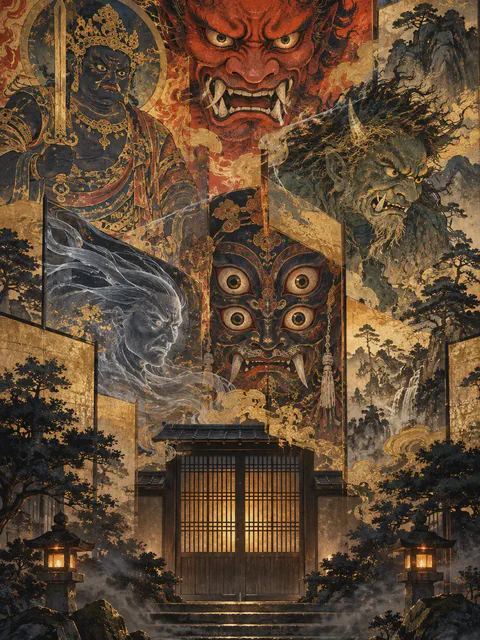
Oni
鬼(おに)
The horned, red-skinned oni with a club is a late composite. The word first named an invisible spirit of the dead, then hell's wardens, mountain monsters, outsiders — and even the figure who once chased oni away.

Teke Teke
テケテケ
Teke Teke is a modern school ghost story, best known as the upper half of a woman who drags herself along on her elbows. Its origin cannot be traced, and one recorded version from a Kobe high school puts it in a mirror instead.
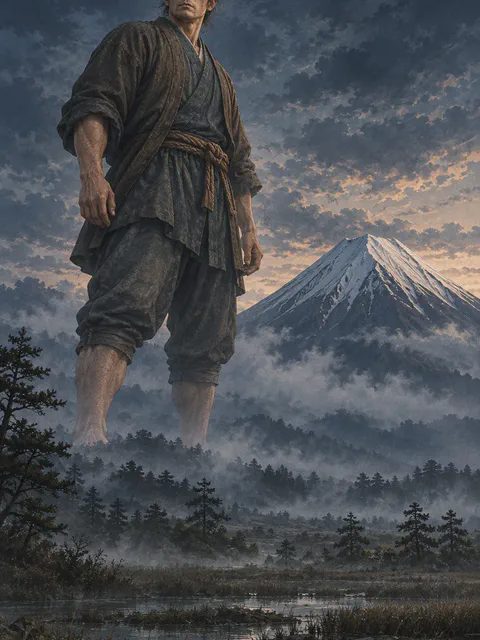
Daidarabotchi
だいだらぼっち
In Sagamihara, a giant called Deirabotchi carried Mt. Fuji on his back, sat down to rest, and found the mountain had taken root. He stamped in frustration, and his footprint became a pond.